



By: Kevin-
On: 30 Aug 2026


| Sub-Total : | $23.30 |
| Eco Tax (-2.00) : | $4.52 |
| VAT (20%) : | $5.66 |
| Total : | $33.48 |
By: Kevin-
On: 30 Aug 2026
On August 26th, the 2026 AGIC Shenzhen International General Artificial Intelligence Conference and Industry Expo opened at the Shenzhen World Exhibition & Convention Center (Bao'an). Themed "Human-Machine Collaboration, Borderless Future," this year's expo adopted a "one conference, one exhibition, and multiple forums" format, bringing together over 1,000 AI companies from more than 30 countries worldwide.
At the expo, how to integrate large-scale models into real-world applications at a lower cost and with lower barriers to entry became a recurring topic of discussion. In the exhibition area jointly created by Shenzhen Bay Technology Development Co., Ltd. and the Shenzhen Artificial Intelligence Industry Association, Shenzhen-based technology company Shifang Ronghai showcased precisely this path for integrating large-scale models into hardware.
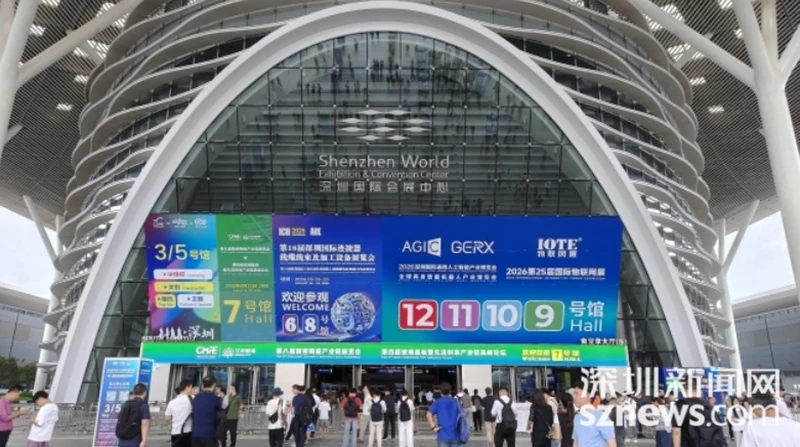
As seen at the exhibition, the industry's focus is shifting from "how powerful the model is" to "how the capabilities can be implemented." Large models can engage in dialogue and generate data, but ensuring their stable operation in toys, home appliances, and healthcare terminals requires overcoming hurdles related to computing power, cost, and compatibility. Meanwhile, demand continues to grow: according to public data, the scale of China's core AI industry is expected to exceed 1.7 trillion yuan by 2026, moving from "being able to think" to "being able to do." Shenzhen, in its deployment to create a "pioneer city for artificial intelligence," has included the National AI Application Pilot Base for mobile terminals in the consumer sector as one of its key initiatives, precisely addressing the transformation from model to product. The maturity of model capabilities is only the starting point; the key to widespread application lies in whether it can successfully pass pilot testing, achieve stable mass production, and be used in real-world applications.
Shifang Ronghai's answer is a comprehensive "engine-open source-intelligent agent-terminal" layout, based on a multimodal AI interaction system. This layout starts with the underlying engine, leverages capabilities accumulated through the open-source community, and then connects to different terminals in the form of intelligent agents, allowing general-purpose large-scale model capabilities to enter traditional hardware at a lower cost and with lower barriers to entry. On-site staff explained that the system supports multilingual recognition, emotion recognition, multimodal fusion, and autonomous feedback. Hardware manufacturers can skip the stages from underlying adaptation to chip optimization, completing prototype verification, product adaptation, and pre-mass production assessment more quickly, shortening the distance between capabilities and products.
To date, Shifang Ronghai's multimodal AI interaction system has been integrated into over 2 million hardware devices, covering scenarios such as smart homes, smart elderly care, and smart toys; daily dialogue volume exceeds 9 million, and daily token consumption exceeds 120 billion. The open-source project has accumulated over 28,400 stars on GitHub, with over 150,000 followers in the open-source community. These numbers do not represent a technical demonstration, but rather the continuous interaction volume generated by a large number of terminals in real-world use.
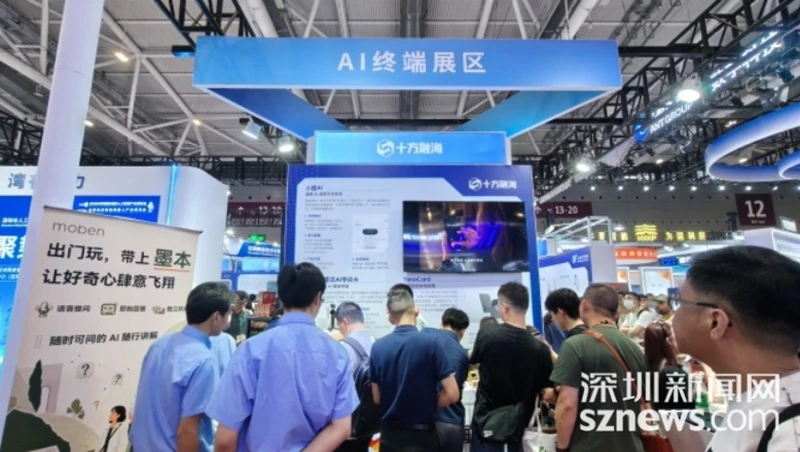
At the exhibition, this capability was also implemented in several specific terminals. Toys that can understand children's questions, elderly care terminals that can recognize the voices of the elderly, and in-vehicle assistants that support multi-turn dialogues... the multimodal AI interaction system has already appeared in these everyday usage scenarios. Notably, an AI-powered learning card at the booth made AI an independent, portable entry point: it doesn't rely on a mobile phone; it's a portable terminal itself, allowing users to invoke AI questions and answers anytime without opening their phones. The entire device abandons social media, news feeds, and short videos, retaining only a question button, focusing solely on the act of "asking questions." "For AI to truly enter daily life, the key isn't how comprehensive its functions are, but how simple and natural the interaction is," explained the product manager. This terminal aims to allow users to use AI without complex operations or entry points—as simple as looking up a dictionary.
Starting from the theme of "Human-Machine Collaboration, Boundless Future," this conference showcased the trajectory of AI capabilities moving from models to products and into real-world scenarios. It is understood that this exhibition will last for three days, and the GERX Global Embossed Intelligent Robot Industry Expo and 48 forums and special business meetings will be held concurrently.
Source: Shenzhen News Network; Reporter: Liu Jiamin


Please log in to your member account first. *



0 Comments