
By: InkWave-
On: 08 May 2026



| Sub-Total : | $23.30 |
| Eco Tax (-2.00) : | $4.52 |
| VAT (20%) : | $5.66 |
| Total : | $33.48 |
By: InkWave-
On: 08 May 2026
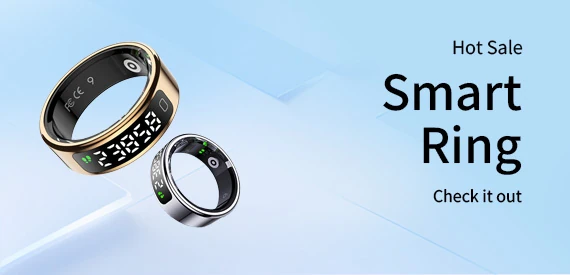
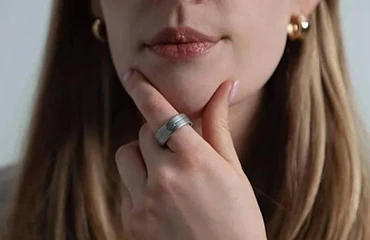
Can a Consumer-Grade Ring Replace a Sleep Lab?
Many people doubt whether a small ring can accurately distinguish between deep and light sleep.
You should know that sleep staging requires an electroencephalogram (EEG); any wearable device can only make indirect estimates.
A One-Night Comparison Test
I wore both the Oura Ring 3 and a professional PSG (polysomnography) simultaneously in a sleep lab to collect data for the entire night.
Total sleep time: The ring and PSG differed by only 6 minutes (the ring overestimated the time spent lying still before falling asleep).
Deep sleep detection: The ring recorded 123 minutes of deep sleep, while the PSG showed 108 minutes, resulting in an 86.5% agreement rate (the industry average is 80–85%).
REM detection: The ring performed poorly, misclassifying some light sleep as REM, with an agreement rate of only 71%.
Smart rings provide good reference values for total sleep and deep sleep, but they are not sufficiently accurate for REM sleep. Their value lies in long-term trends rather than absolute values for a single night.
A study published in the journal *Sleep* (n=80) showed that the correlation coefficient between the Oura Ring and PSG for deep sleep duration was 0.75, which is acceptable.
Instead of worrying about a single night’s reading, focus on the trend over 30 consecutive days.
Venus Smart Shop shows you how to use your ring effectively.
Please log in to your member account first. *

0 Comments