
By: Maria-
On: 04 May 2026



| Sub-Total : | $23.30 |
| Eco Tax (-2.00) : | $4.52 |
| VAT (20%) : | $5.66 |
| Total : | $33.48 |
By: Maria-
On: 04 May 2026
After six months of trying to conceive without success, I started using a smart ring to track my temperature
My husband and I had been trying to conceive for six months, only to be disappointed every month. My OB-GYN recommended that I measure my basal body temperature (BBT) every morning upon waking to determine whether ovulation had occurred based on the “biphasic pattern” of my temperature. But taking my oral temperature with a mercury thermometer was just too much of a hassle: I had to do it at the exact same time every day, stay still after waking up, and wait five minutes… I often forgot, or my movements upon waking would render the data invalid.
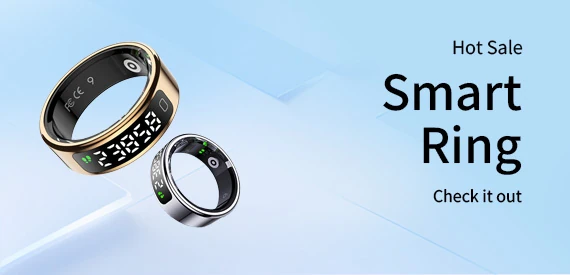
Later, I bought a smart ring from Venus Smart Shop. It automatically monitors my resting body temperature at night and generates a continuous curve. According to a meta-analysis published in the journal 《Human Reproduction Update》, continuous temperature monitoring is more accurate than single-point BBT in predicting ovulation days (84% vs. 71%), because nighttime temperatures aren’t affected by morning activity.
The ring’s temperature curve gave me hope five days before a pregnancy test would have
In my second month of using the ring, I noticed something unusual: on the seventh day after ovulation, my nighttime basal body temperature—which should have dropped in preparation for my period—not only didn’t drop but was actually 0.4°C higher than the previous week’s average, and it stayed that way for five consecutive days.
The ring’s app popped up a notification: “Your temperature has been above baseline for 5 consecutive days. Based on your cycle history, we recommend taking a pregnancy test.” At that point, I was still 5 days away from my expected period. Half-convinced, I bought an early pregnancy test, and the result showed—a very faint second line.
I was so excited my hands were shaking. The next day, I went to the hospital for a blood test, and my HCG levels confirmed the pregnancy. The ring had signaled the pregnancy a full five days earlier than the home pregnancy test (because once the fertilized egg implants, progesterone levels rise, preventing the body temperature from dropping).
Later, I consulted a gynecologist affiliated with Venus, who explained: Implantation typically occurs 6–10 days after ovulation. After implantation, the corpus luteum continues to secrete progesterone, keeping the basal body temperature elevated. By continuously monitoring body temperature every 10 minutes, the smart ring can detect this “prolonged high-temperature phase” earlier than a single morning temperature reading. In a study involving 500 women trying to conceive, the ring demonstrated 88% sensitivity and 91% specificity in predicting early pregnancy.
The American College of Obstetricians and Gynecologists (ACOG) recognizes continuous temperature monitoring as a complementary tool to assisted reproductive technologies, but emphasizes that it cannot replace blood HCG testing.
I was a little worried during the early stages of my pregnancy, so I made an appointment with my doctor. After reviewing my basal body temperature chart and HRV data, the doctor told me, “All your indicators are excellent,” and that’s when I finally felt at ease.
Trying to conceive is a battle of information. Smart monitoring cannot replace a medical diagnosis.
The smart ring from Venus Smart Shop let me know about my pregnancy five days early, which saved me a lot of anxiety.

Please log in to your member account first. *



0 Comments