

By: Kevin-
On: 12 Sep 2026


| Sub-Total : | $23.30 |
| Eco Tax (-2.00) : | $4.52 |
| VAT (20%) : | $5.66 |
| Total : | $33.48 |
By: Kevin-
On: 12 Sep 2026
At this year’s Optoelectronics Expo, Caiwen observed that the industry chain is refining every detail in the pursuit of creating a pair of glasses that are truly practical for everyday wear.
On September 10, at Hall 2 of the Shenzhen World Exhibition & Convention Center, the AR eyewear industry chain was laid out in full view, effectively deconstructed for all to see.
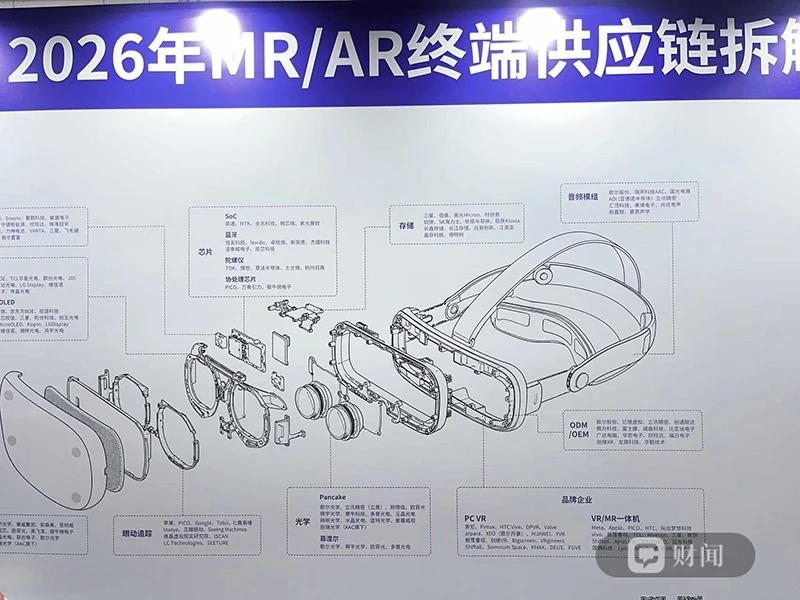
Breakdown of the MR/AR device supply chain (Photo by Gu Qunsheng)
The lineup includes optical waveguides and Micro LED optical engines, as well as chips, batteries, eye-tracking technology, and complete device solutions. This year, manufacturers are focusing on more specific issues: Can the lenses be made thinner? Can rainbow artifacts and light leakage be eliminated? How much further can chip power consumption be reduced? And can the glasses be worn comfortably all day long?
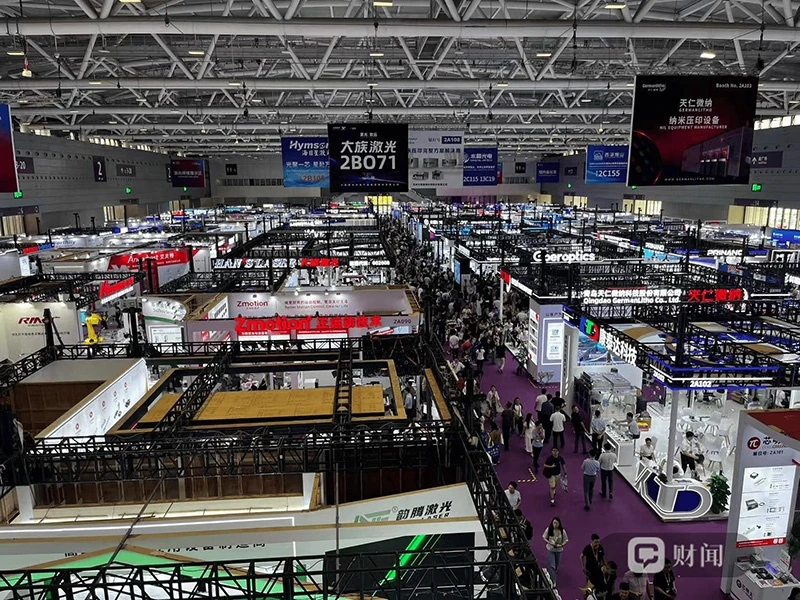
2026 CIOE event (Photo by Gu Qunsheng)
The AI AR Glasses Industry Development Summit held that day also centered on these issues. Topics ranged from optical architecture, nano-imprinting, and micro-displays to batteries, AI agents, and memory systems. The industry supply chain is gearing up for mass shipments.
Yet, the practical question remains: why would consumers want to wear a pair of glasses with a display for extended periods?
Market data offers an optimistic perspective. According to IDC, global smart glasses shipments reached 3.566 million units in the first quarter of 2026, a year-on-year increase of 130.1%. Of this total, AR and VR products accounted for 1.318 million units, up 85.9% year-on-year.
However, the highest sales volumes currently come from AI glasses that lack a display or feature only minimal display capabilities. While AR glasses with actual display functions are growing rapidly, they have yet to prove their ability to break into the mass market.
At the event, Meng Xiangfeng, CEO of Zhige Technology, summarized the product direction for AR glasses as "an exceptional wearing experience combined with superior optical performance."
In his view, components such as chips and batteries can leverage existing supply chains from smartphones, smartwatches, and headphones. Display systems, however, represent a cost factor unique to AR glasses and constitute a primary technical bottleneck.
This bottleneck manifests in more than just parameters like field of view and brightness. Diffractive optical waveguide lenses are covered in nano-scale gratings, which can cause rainbow artifacts, light leakage, and a noticeable "grating effect." Lens light transmittance also impacts the daily wearing experience.
Consequently, when trying out a pair of AR glasses at a booth, the most direct approach is to constantly shift the viewing angle. One needs to check for lens reflections and observe whether the wearer's eyes are obscured by the grating structure.
Beyond displays, AI is also transforming the utility of eyewear.
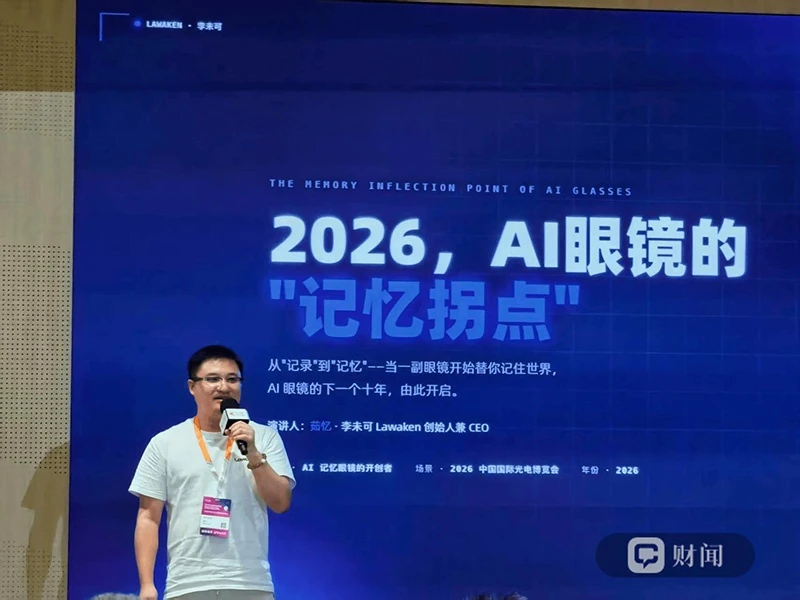
Ru Yi, Founder and CEO of Liweike (Photo by Gu Qunsheng)
Ru Yi, Founder and CEO of Liweike, believes that eyewear should not merely serve as an entry point for large models; it should also act as the "eyes and ears" through which AI perceives the real world.
This year, Liweike has refined its product positioning to focus on "memory glasses." Ru Yi identifies 2026 as the "memory inflection point" for AI glasses. As intelligent agents gain the ability to generate documents, schedule appointments, and execute tasks, the information captured by the glasses can begin to translate into concrete actions.
"Recording is certainly not the same as remembering," Ru Yi says. True memory involves not only preserving information but also understanding people, events, and context, while establishing connections between disparate pieces of data. For instance, a meeting recording needs to be synthesized into project updates, conclusions, and action items, all while being linked to prior communications.
His vision entails a division of labor: the glasses handle perception and memory, while office software and intelligent agents handle execution. Information generated during in-person meetings and business interactions can be fed into tools like WorkBuddy to generate transcripts, presentations, and schedules, or to track specific tasks. Ru Yi summarizes this evolution as a shift from merely "hearing and seeing" to "understanding, connecting, and utilizing."
This approach provides new use cases for AI glasses but also raises privacy concerns. When a device continuously captures real-world information, how can the informed consent of those nearby be obtained? Where is the data stored? Can users permanently delete it? These questions will determine whether the product can successfully enter office environments and everyday social settings.
Another trend was also evident at the event: the AR industry is expanding into the realms of robotics and spatial intelligence.
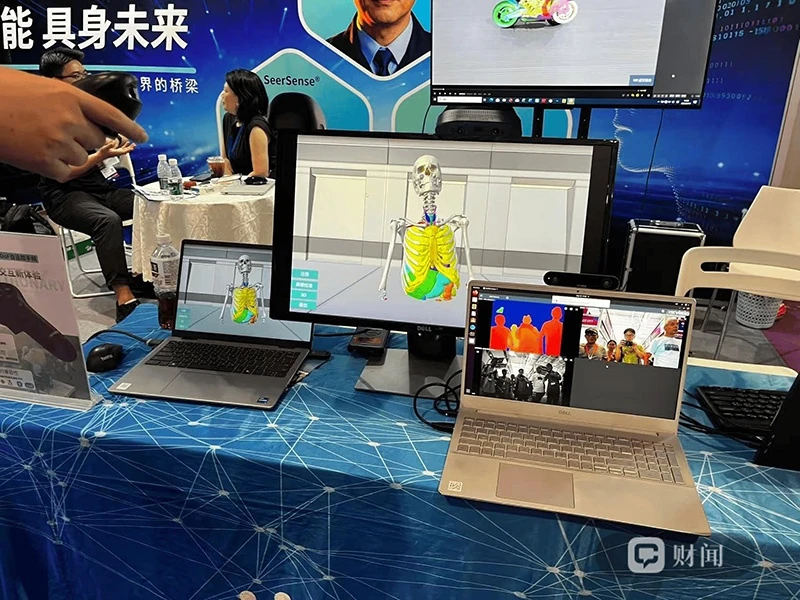
Xvisio Technology booth (Photo by Gu Qunsheng)
At the Xvisio Technology booth, staff explained to *Caiwen* that their product lineup now extends beyond MR glasses. The booth also showcased spatial computing modules, 6-DoF controllers, and data acquisition devices designed for embodied AI. Tang Guang told *Caiwen* that their products are currently being applied in scenarios such as robotic teleoperation, intelligent recognition, industrial maintenance, digital twins, and data acquisition.
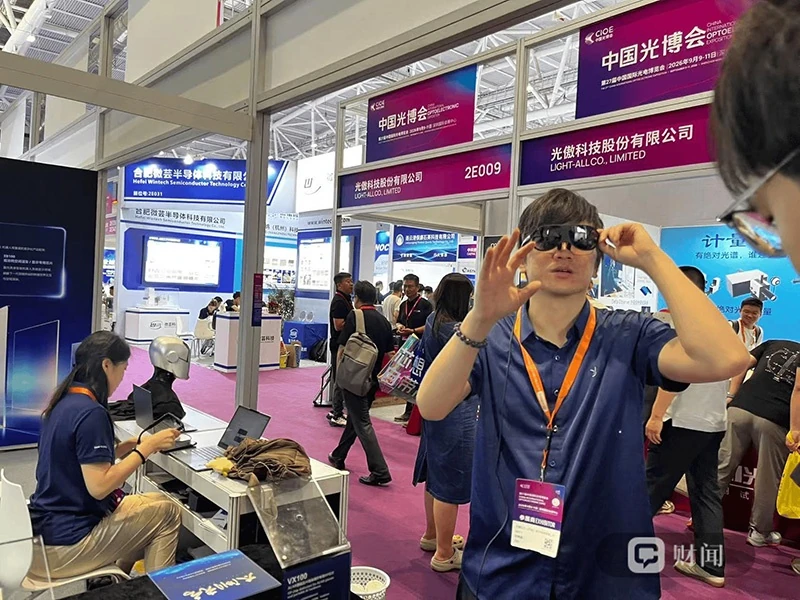
Gravitational Wave (Wanyouyinli) Booth (Photo by Gu Qunsheng)
At the Gravitational Wave booth, Caiwen tested AI glasses powered by the company's all-around spatial computing MR chip. Upon putting on the glasses, users can manipulate images projected into real-world space using simple finger-pinching gestures. They can also engage in various interactive actions, such as dismantling a displayed device and pulling out individual components with their fingers for closer inspection.
Gravitational Wave staff explained that their G-VX100 chip—designed for AI and AR glasses—measures just 4.2 millimeters on its shortest side. The chip supports four camera inputs, 16-megapixel photography, and 4K video recording; power consumption is 260 milliwatts when recording 1080P video.
Meanwhile, the G-X100 chip, designed for MR applications, aims to further integrate image processing, sensor fusion, and spatial computing capabilities.
The smart glasses industry has long grappled with an "impossible triangle" dilemma: the difficulty of simultaneously balancing battery life, weight, and functionality. Greater functionality demands higher computing power and energy consumption, yet increasing battery capacity directly impacts the glasses' weight and wearer comfort.
At this year's Optoelectronics Expo, Caiwen observed that the industry supply chain is optimizing every detail in pursuit of creating a pair of glasses that are truly practical for everyday wear.
To address these challenges, hardware manufacturers are optimizing the overall user experience by refining the glasses' structural design and battery configuration. On the software front, companies are also seeking use cases that offer more sustained value than standard features like translation, photography, and teleprompting.
By Gu Qunsheng (Caiwen), reporting from Shenzhen

Please log in to your member account first. *



0 Comments