
By: Steve-
On: 09 Jul 2026





| Sub-Total : | $23.30 |
| Eco Tax (-2.00) : | $4.52 |
| VAT (20%) : | $5.66 |
| Total : | $33.48 |
By: Steve-
On: 09 Jul 2026
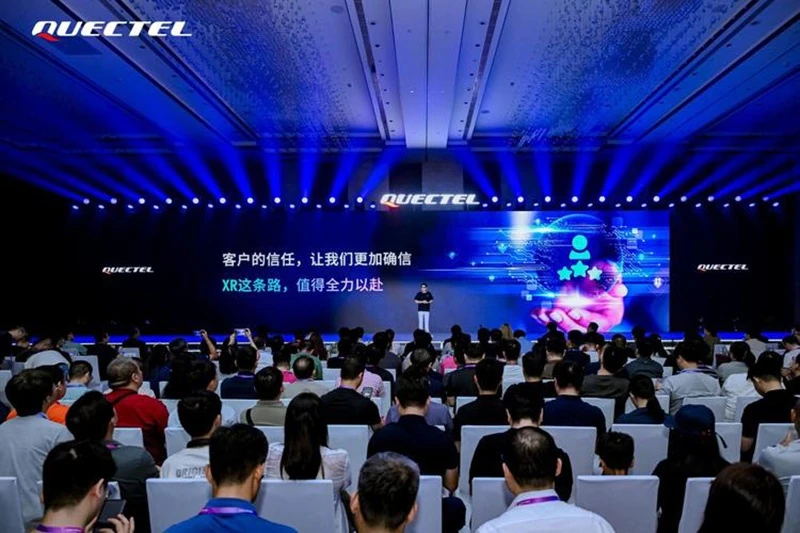
Three Years of Evolution: A Strategic Leap from "Intelligent Connectivity" to "Vision"
At the event, Zhang Dong, Co-founder and COO of Quectel, outlined the company's strategic transition from "Intelligent Connectivity" to "Vision," tracing the trajectory through the three stages of IoT development.
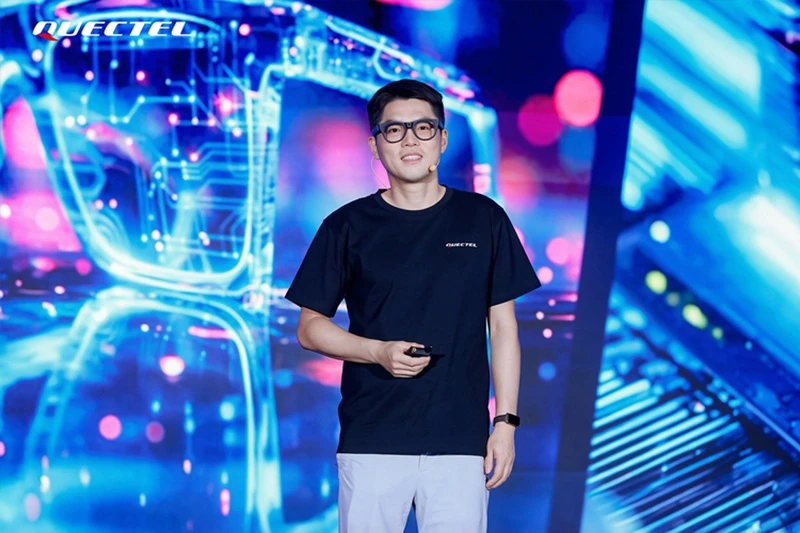
Zhang Dong, Co-founder and COO of Quectel
In 2010, as the "Internet of Everything" was just beginning to gain momentum, the industry's core focus was "connectivity" itself; Quectel laid the strategic foundation for its "1.0 era" by enabling various devices to stay online through stable and reliable connectivity. From 2015 onwards, the market shifted from basic connectivity to demanding superior user experiences, interactivity, and real-time responsiveness; Quectel adapted to this trend by establishing "intelligent response" as the keyword for its "2.0 era." Today, with the convergence of AI, robotics, and XR technologies, Quectel has officially entered the "3.0 era"—transitioning from mere response to active decision-making.
Zhang Dong stated, "Quectel has integrated AI decision-making capabilities into the physical bodies of various types of robots. As for XR, we firmly believe that the eyes will serve as the primary gateway for the next generation of human-machine interaction." In his view, the fundamental logic of XR lies in the deep integration of connectivity, computing power, and AI—three core capabilities that represent the solid foundation Quectel has built over the past fifteen years in the fields of communications and intelligence.
A three-dimensional capability framework comprehensively supports XR products from definition to mass production.
Ma Guowen, General Manager of the XR Product Line at Quectel, subsequently reviewed the technical expertise the Quectel XR team has accumulated over the past three years.
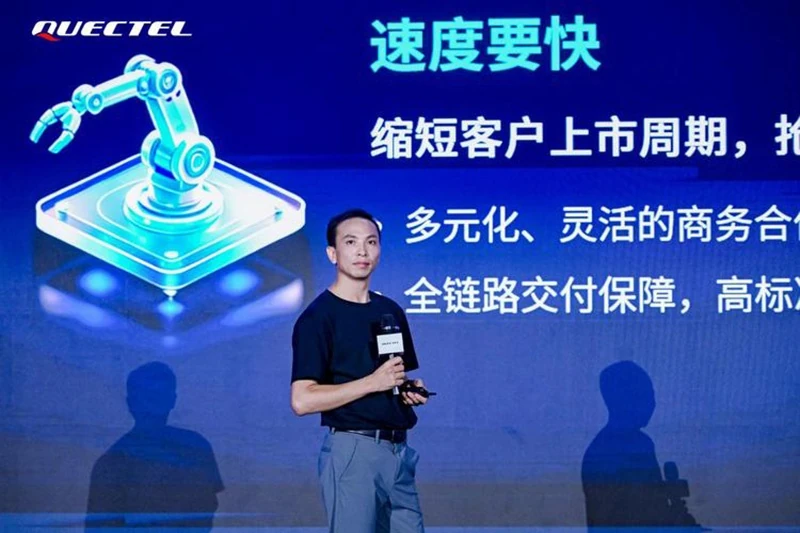
Ma Guowen, General Manager of the XR Product Line at Quectel
Ma Guowen notes that over the past decade or so, Quectel has witnessed the XR industry’s full cycle—from a period of capital-fueled frenzy to a return to fundamental value. The company’s decision to maintain its investment is grounded in a prudent assessment of technological trends; indeed, Quectel’s diversified product and technology matrix serves as the cornerstone of XR development. As AI and intelligent agents increasingly converge, the next generation of human-machine interaction is being redefined. XR glasses, acting as the optimal vehicle and gateway for AI capabilities within the wearable device sector, are poised to be the first to realize significant commercial value.
Over the past three years, Quectel has eschewed shortcuts. Ma Guowen explains, "We focused on two things: adding capabilities while streamlining processes. What we eliminated were the complexities of customer R&D investment, the high barriers to entry for XR manufacturing, and the lengthy timelines required to bring XR devices to market."
To meet the exacting demands of both consumer and vertical industry markets—which require superior products, rapid development, and robust supply chain capabilities—Quectel has introduced a three-dimensional capability framework: "0-1, 1-N, and 1+N." This framework focuses on defining and designing XR hardware and software reference solutions, addressing the challenges of precision manufacturing and delivery speed during the scaling phase, and providing ecosystem integration services that span the entire industry chain.
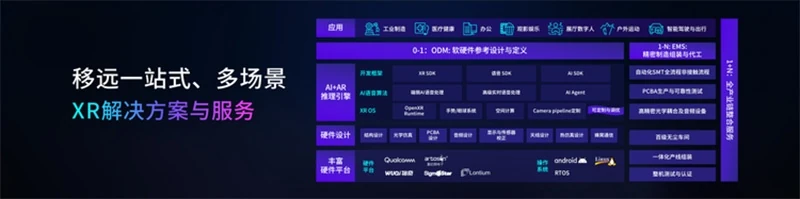
At the launch event, Ma Guowen showcased Quectel’s capabilities in AR eyewear manufacturing through a video featuring the XR production line at the company’s Changzhou Intelligent Manufacturing Center. The facility is equipped with comprehensive XR assembly lines and Class 100 cleanrooms, enabling the mass production of various XR devices.
"By partnering with Quectel and leveraging our robust manufacturing resources, customers can dedicate their full attention to product definition and market expansion," said Ma Guowen. Quectel maintains close collaborations with chipmakers such as Qualcomm Technologies, KuXin Micro, and Wuqi Micro; voice technology partners like Elephantech; and numerous hardware supply chain partners. Quectel acts not merely as a supply chain integrator, but as an enabler across the entire XR product lifecycle—from initial definition to mass production.
Debut of Hawk and Dolphin Series: A Multi-Pronged Entry into the XR Hardware Market
Quectel officially unveiled a range of core AI+XR reference designs, catering to diverse chip platforms, optical solutions, and computing power requirements.
The Hawk series of AI+AR glasses encompasses both optical waveguide and BirdBath models, catering to a variety of vertical application scenarios. The optical waveguide reference design features a lightweight, all-in-one form factor and offers two architectural options—"Qualcomm Snapdragon AR1 Gen 1 Platform + Wuqi Micro WQ7036" and "Kuxin Micro ARS45 + Wuqi Micro WQ7036"—allowing customers to make flexible choices based on specific use cases and cost requirements. Innovatively, these glasses support three-level electrochromic dimming; the lenses automatically adjust their light transmission based on ambient lighting, effectively resolving the issue of significant display quality discrepancies when transitioning between indoor and outdoor environments.
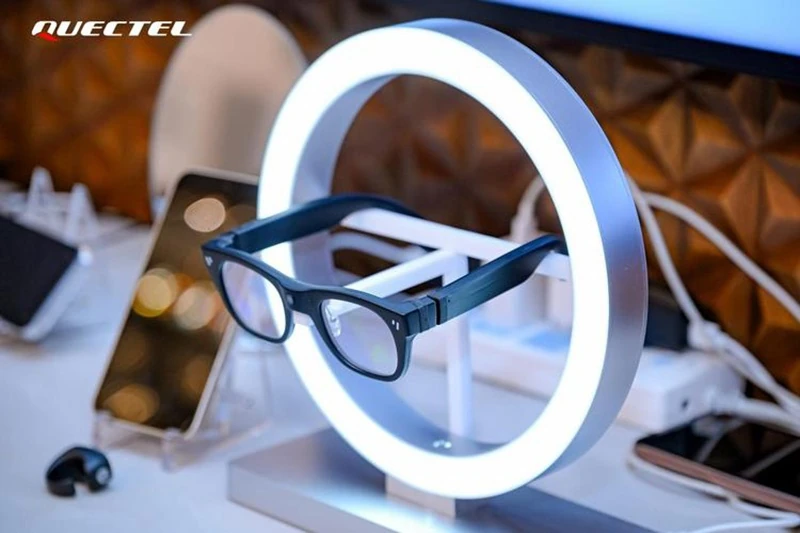
Functionally, it supports capabilities such as an AI voice assistant, real-time language translation, photo and video capture, and AI audio processing, catering to both the consumer market and vertical sectors—including cultural tourism exhibitions, industrial quality inspection, remote collaboration, and healthcare.
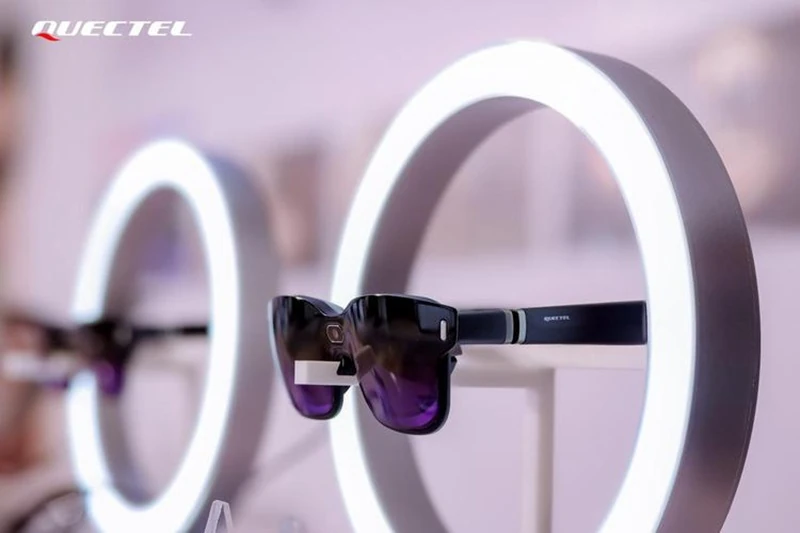
The proprietary split-design, full-color BirdBath AR glasses reference design emphasizes an immersive visual experience, featuring a 50±1° field of view (FOV), brightness up to 5,000 nits, and Full HD (1920×1080) resolution per eye with refresh rates ranging from 60 to 120 fps. It also incorporates three-level electrochromic dimming and diopter adjustment (0 to 400 degrees), making it highly user-friendly for those with myopia. The device integrates dual digital microphones (DMIC), stereo speakers, and wear-detection sensors; paired with a 12-megapixel wide-angle camera, it delivers a high-definition, large-screen experience without the need for corrective eyewear.
The Dolphin series of AI+AR computing units draws inspiration from the intelligence and agility of dolphins, embodying powerful computing capabilities and flexible scalability.
Based on the Qualcomm® Q-6690 and QCS8550 platforms, the series comprises two versions: a 5G edge-cloud converged version and an edge-computing version. The 5G edge-cloud converged version features a proprietary embedded eSIM—supporting carrier certifications across more than 150 countries and regions—and comes with a self-developed eIM management platform. The edge-computing version delivers 48 TOPS of computing power, enabling the deployment of AI agents directly on the device.
These computing units not only connect to AR glasses to provide rich OS resources and AI interaction capabilities (such as agent-centric intent control and command-based interaction) but also link via wired or wireless connections to a wider range of devices—including 3D headsets and monitors. This significantly expands application scenarios, serving as an intelligent assistant for both work and daily life.
Industry partners gather to build the XR ecosystem
At the launch event, several of Quectel’s key industry partners also shared in-depth insights.
Jeff Zhu, Senior Vice President at Qualcomm Technologies, stated: "Personal AI and spatial computing are emerging as key drivers of device innovation in the era of AI agents. Future smart devices will require not only enhanced capabilities in understanding, perception, and collaboration but also the ability to integrate more naturally into users' daily lives. XR devices, such as smart glasses, are poised to become vital platforms for AI agents, unlocking new growth opportunities for the industry. Qualcomm Technologies remains committed to driving innovation in spatial computing, on-device AI, and connectivity technologies, while collaborating with industry partners to foster the growth of the ecosystem."
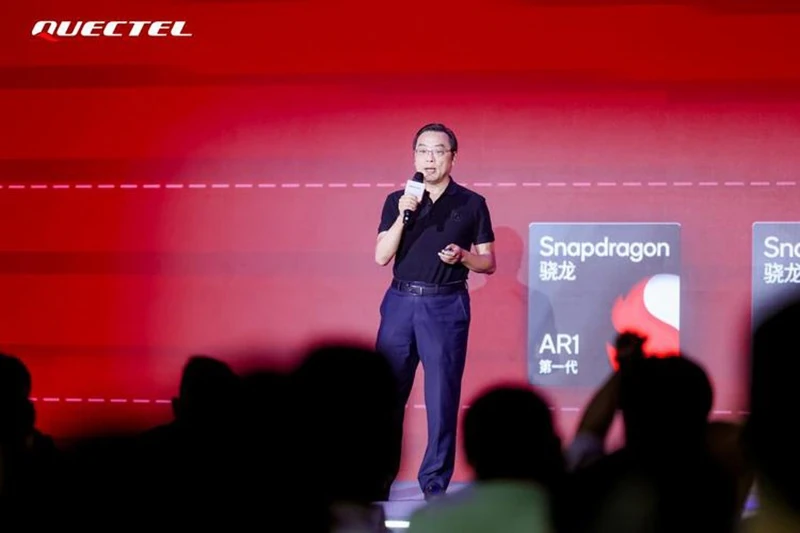
Zhu Xiaodong, Senior Vice President at Qualcomm Technologies, Inc.
Yan Yongjie, R&D Director at Elephas Tech, noted that AI glasses face multiple challenges in real-world applications, including complex noise environments, echo interference, limitations in far-field sound pickup with small microphone arrays, and strict low-power constraints. To address these pain points, Elephas Tech launched an intelligent voice solution for AI glasses based on "DNN + Computational Auditory Scene Analysis" technology. This solution delivers core capabilities such as AI call noise reduction with sound zone isolation, directional sound pickup from the front for face-to-face translation, and ultra-low-power Keyword Spotting (KWS). The AI+XR voice solution, jointly developed by Quectel and Elephas Tech, features a modular design that allows for the flexible combination of algorithms—such as AEC, noise reduction, and directional sound pickup—tailored to specific application scenarios, while also supporting deployment and tuning across multiple chip platforms. Currently, this solution has been integrated into Quectel’s proprietary reference design for lightweight, all-in-one AI+AR glasses featuring optical waveguide technology.

Yan Yongjie, R&D Director at Elephantech
Shen Bo, Co-founder and CTO of Co-Chip Microelectronics, analyzed four major challenges facing the AI eyewear industry: display quality limitations, battery life anxiety, insufficient computing power, and poor wearing comfort. He pointed out the fundamental conflict between high-resolution display requirements and the need for low power consumption, noting that the ARS45 chip was specifically designed to address these pain points. Built on a 12nm process, the chip integrates a quad-core A53 processor, a 1GHz vision DSP, and an NPU delivering an equivalent computing performance of 6 TOPS. In terms of imaging capabilities, it supports seven video input channels, binocular 1080p@120Hz display, and 16-megapixel HDR photography, all while reducing overall power consumption by 50% compared to the previous generation.
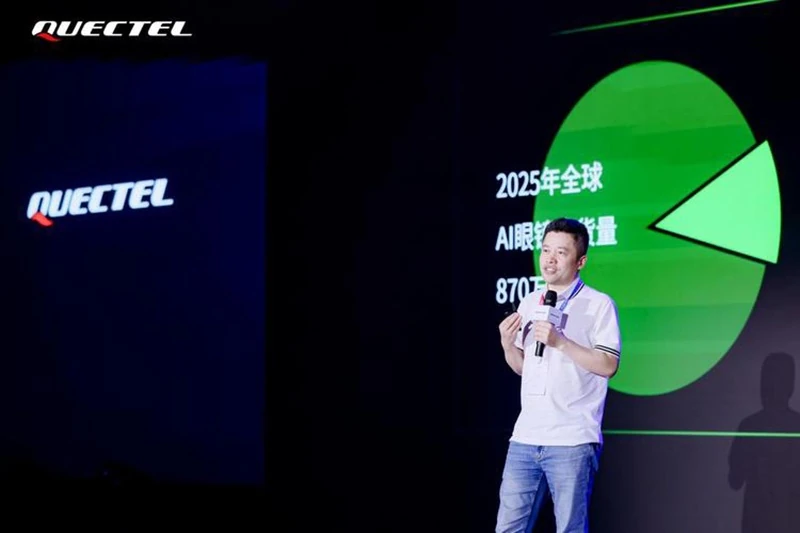
Shen Bo, Co-founder and CTO of Co-Chip Microelectronics
Huang Pan, CEO of Chuanshiyun Technology, shared the product philosophy behind lightweight AI glasses from the perspective of a terminal brand. He emphasized the need to strike a balance among weight, battery life, aesthetics, and the interactive experience; the reference designs and engineering support provided by Quectel enable brands to focus their efforts on refining the user experience and expanding into the market.
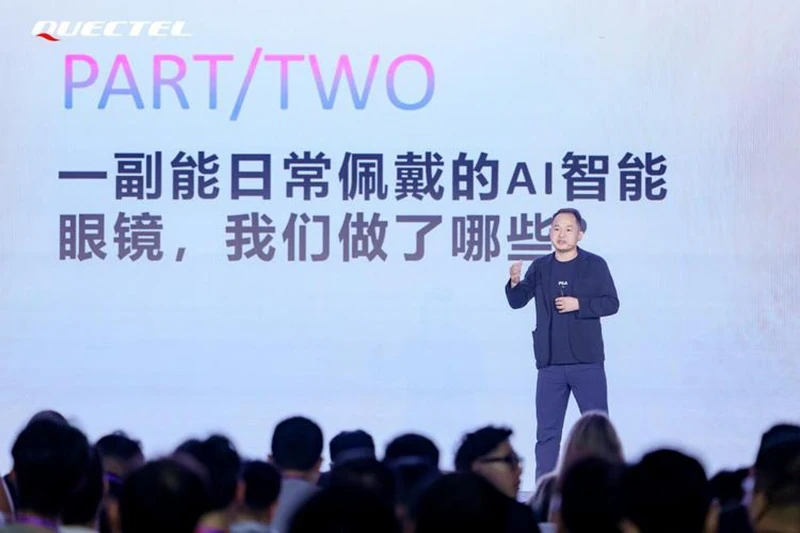
Huang Pan, CEO of Chuangshi Cloud Technology
Lin Hao, Co-founder and CTO of Wuqi Microelectronics, shared the company's achievements in empowering the new XR ecosystem through its diverse AI eyewear solutions. Leveraging its proprietary capabilities in wireless communication and AI multimodal heterogeneous computing, Wuqi Micro has formed a powerful partnership with Quectel—combining its own strengths with Quectel’s robust engineering foundation—to jointly develop cost-effective solutions. These solutions span a wide range of price points and application scenarios, offering flexible options for the diverse implementation of AI eyewear.
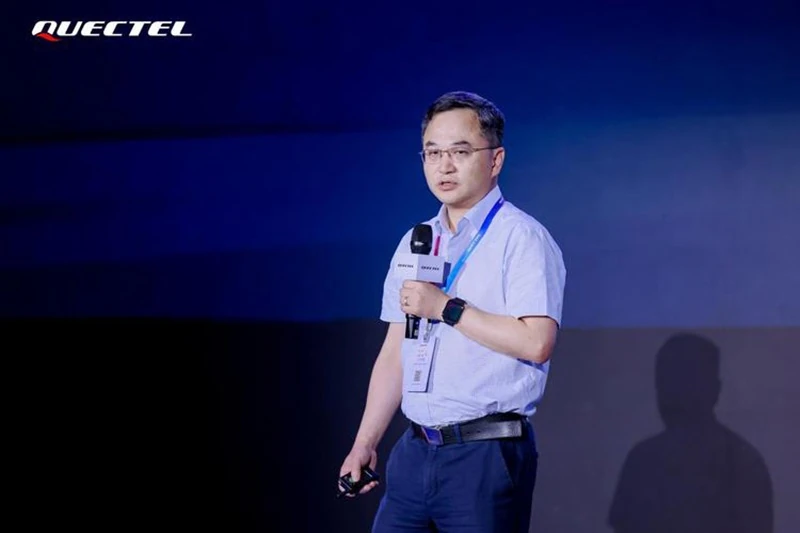
Lin Hao, Co-founder and CTO of Wuqi Microelectronics
The XR industry is transitioning from proof-of-concept to large-scale commercialization. Quectel will continue to leverage its strengths across technology, intelligent manufacturing, and the ecosystem to help global XR customers accelerate product deployment, while jointly exploring the infinite possibilities for next-generation human-machine interaction contained within the compact confines of XR lenses.
Please log in to your member account first. *



2 Comments
Steve
Jul 09, 2026 21:59:04AI glasses have emerged as one of the hottest smart hardware sectors in the era of AI agents, attracting the attention of both startups and industry giants. As a leader in IoT communications, Quectel possesses inherent strengths in key technologies essential to the XR sector, including communications, AI, chipsets, and operating systems. Quectel’s one-stop XR solutions cover the entire product lifecycle—from R&D and deployment to services such as hardware and software customization, manufacturing, assembly, and final product delivery—enabling a superior balance of performance, power efficiency, and lightweight design. The XR market is characterized by distinct segmentation and vertical specialization, with diverse requirements across different manufacturers. Quectel’s solutions empower a wider range of market players to accelerate their pace in the AI agent era and capitalize on industry growth opportunities, thereby driving the overall advancement of the XR industry. In the face of intensifying future competition, Quectel—with its comprehensive end-to-end hardware and software capabilities—is poised to become a key player in the XR sector.
Steve
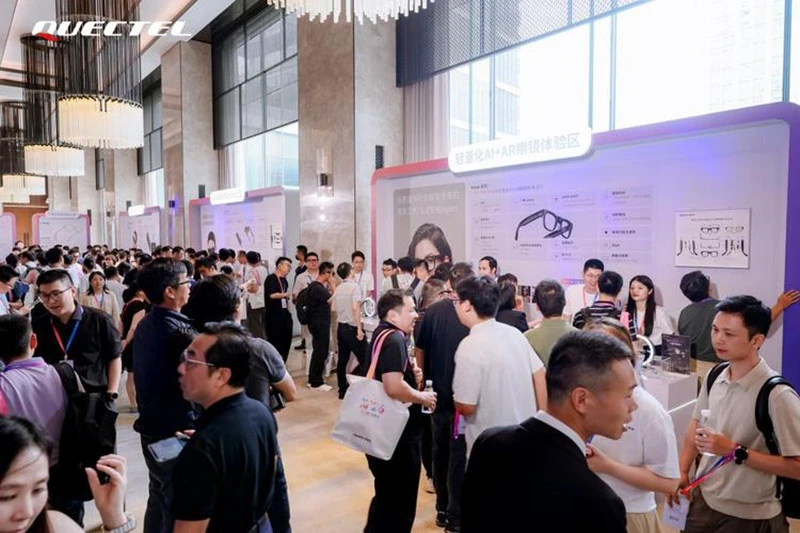
Jul 09, 2026 21:56:59At 2:00 PM on July 9, the "Compact Lens, Infinite Horizons | Quectel XR Solutions and Ecosystem Strategy Launch Event" will officially take place at the Raffles Shenzhen. Within the compact confines of a pair of glasses weighing mere tens of grams, the integration of optics, sensors, and precision components creates an infinite visual expanse and opens up a realm of future possibilities. As XR technology crosses critical thresholds in optics, computing power, and interaction, eyewear is evolving from a mere accessory into a gateway to the next-generation computing platform—offering all-day wearability, proximity to the audiovisual centers of perception, and a seamless, natural user experience. With AI fully entering the era of intelligent agents, smart glasses are poised to become the ideal hardware platform. This vision drives Quectel’s decision to officially unveil its XR strategy at this juncture. At the event, Quectel will debut a range of new XR products.