



By: Steve-
On: 13 Sep 2026


| Sub-Total : | $23.30 |
| Eco Tax (-2.00) : | $4.52 |
| VAT (20%) : | $5.66 |
| Total : | $33.48 |
By: Steve-
On: 13 Sep 2026
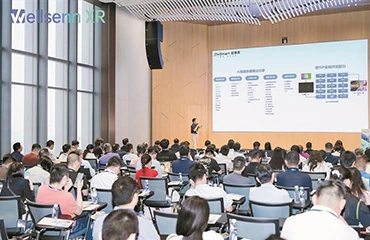
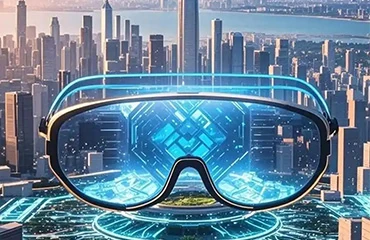
On September 7, the 2026 Global AI Glasses Industry Supply Chain Conference was held in Bao'an District, Shenzhen. Guided by the Bao'an District Bureau of Industry and Information Technology and the Xin'an Subdistrict Office, and hosted by Shenzhen Weishen Information Technology Co., Ltd., the event attracted leading upstream and downstream enterprises—such as Infineon, Jihao Technology, Chaoxiangsu Technology, Zecheng Electronics, Yitian Technology, and Yongxin Technology. The conference covered the entire industry chain, spanning chips, interaction technologies, image algorithms, hardware substrates, mass production of devices, and peripheral integration.
Experts from Across the Value Chain Convene to Decode Core Technological Breakthroughs
He Wancheng, founder of the conference organizer Weishen Information, noted that AI glasses are rapidly transitioning from conceptual products to consumer and industrial applications. The industry widely regards them as the next general-purpose interface for human-computer interaction, following the smartphone. According to estimates by authoritative industry bodies, the global AI glasses market is on the verge of explosive growth. Global shipments are projected to double to 16 million units by 2026 and climb to 80 million units by 2030. In the medium to long term—between 2035 and 2040—global ownership and consumer demand could reach 1.4 to 1.5 billion units. A trillion-yuan "blue ocean" market is rapidly taking shape.
The conference brought together experts from six key sectors—chips, interaction technologies, algorithms, hardware substrates, device manufacturing, and peripheral integration—to share insights, covering the entire technical chain of AI glasses from underlying components to end-user deployment.
Wei Ming, Global Marketing Director for Smart Wearables at Infineon, opened the session with a presentation titled "Smart Glasses Solutions: From Product Innovation to Delivering Customer Value." He introduced Infineon’s low-power system solutions for smart glasses—featuring core components such as PSoC Edge NPU chips, low-power Wi-Fi/Bluetooth combo modules, and MEMS microphones—specifically addressing industry pain points like high power consumption for keyword wake-up and the difficulty of balancing wireless connectivity requirements.
Chen Keqing, founder of Jihao Technology, presented on "Eye-Tracking: The Key to Future AI Applications." He pointed out that the human eye uses an attention mechanism to compress the vast visual world into information the brain can process. Eye-tracking is the critical technology that enables AI glasses to "view the world selectively," much like the human eye; this capability drastically reduces the volume of data generated throughout the day, making real-time Bluetooth transmission feasible. Zhang Yan, founder of Chaoxiangsu Technology, presented on "AI Glasses EGO-Perspective Capture: Implementation Challenges for Motion Stabilization, Wide Dynamic Range (WDR), and Low-Power Image Algorithms." He showcased algorithm solutions—such as on-device HDR and hardware-based Warping EIS—designed to run directly on the glasses, addressing challenges related to image shake and quality in scenarios ranging from daily vlogging and outdoor sports to industrial inspections.
Zecheng Electronics R&D Center Chief Engineer Zhu Wan spoke on "High-Density FPC and Rigid-Flex PCBs: The Interconnect Foundation Enabling Lightweight Mass Production of AI Glasses," analyzing the evolution of AI eyewear weight from 579g headsets to 40g glasses. He highlighted high-density FPCs and rigid-flex PCBs as keys to lightweight mass production; Zecheng Electronics has achieved mass-production capabilities for fine circuitry (L/S 40/40μm), dynamic bending endurance of 40,000–80,000 cycles, and 6-layer stack-ups under 0.35mm in thickness, ensuring stable delivery for multiple mass-produced AI eyewear models.
Jiang Gaoping, General Manager of Yitian Technology, shared insights on "From Concept to Mass Production: Supply Chain Practices in Full-Stack ODM Development for AI Glasses." He introduced a complete system solution based on a dual-chip architecture (SSC309QL + Bestechnic BES2800), covering critical modules such as low-power design, audio algorithms, and on-device AI engine acceleration, while demonstrating end-to-end capabilities ranging from the customer's Product Requirements Document (PRD) to final mass-production delivery.
Chen Ping, Deputy General Manager of Yongxin Technology, presented "Breaking New Ground with Chiplet Technology: Smart Rings Enable Seamless Interaction for AI Glasses." He showcased a smart ring solution integrating an NRF54L15 SoC, a PPG heart rate sensor, and array touch/gesture algorithms. By utilizing Chiplet technology to integrate over 90 BOM components into a compact 12mm × 6mm SiP module, the solution creates a new gateway for "seamless interaction" with AI glasses.
National Supply Chain Converges; Bao’an’s “5-Kilometer Industrial Circle” Advantage Stands Out
This conference is a specialized event covering the entire national AI eyewear supply chain. Participating enterprises—ranging from upstream providers of chips, sensors, optical waveguides, and micro-display modules to midstream manufacturers of FPC/rigid-flex boards and ODMs, and finally to downstream terminal brands and interactive peripherals—have collectively mapped out the supply landscape of China’s AI eyewear industry.
Industry statistics indicate that over 80% of global AI eyewear supply chain companies are based in China, demonstrating highly efficient industrial synergy centered in the Pearl River Delta. As the host of this conference, Bao’an District has established a comprehensive smart eyewear supply chain that spans everything from key modules and core components to complete device manufacturing and terminal branding. A preliminary survey identifies approximately 60 smart eyewear supply chain enterprises in Bao’an: 23 upstream companies provide core components such as Sunwoda’s battery modules, Zhaowei Machinery & Electronics’ micro-drive systems, and Fushida’s hinges; 10 midstream companies—including Luxshare Precision—possess capabilities in complete device manufacturing and system integration; and 27 downstream companies include brands such as Dreame Technology, Shokz, and Vivo Communication.
A common saying in the industry goes: "In Bao’an, you can source every single component for a pair of AI glasses—including chips, PCBs, batteries, and structural parts—within a five-kilometer radius," enabling exceptional efficiency in R&D, prototyping, and product iteration. This industrial cluster effect is a crucial factor in transitioning AI eyewear from concept to mass production.
Building on this industrial foundation, policy support is accelerating. In June of this year, Bao’an District issued "Several Measures to Further Promote the High-Quality Development of the Smart Eyewear Industry." These measures introduce eight specialized support policies targeting key areas such as chips, optical waveguides, and Micro-LED displays, while fast-tracking the establishment of a smart eyewear industry fund with a strategic focus on "early-stage, small-scale, and hard-tech" investments. According to the "Bao’an District Action Plan for Promoting High-Quality Development of the Smart Eyewear Industry (2025–2027)," the district aims to increase the number of smart eyewear supply chain enterprises to over 100, cultivate two to three industry-renowned companies, and launch more than ten deep-application projects by 2027. From a major manufacturing hub to a powerhouse of intelligent manufacturing—and spanning everything from industrial chain density to the strength of policy support—Bao'an is leveraging its unique industrial ecosystem advantages to accelerate toward the goal of becoming a global hub for AI eyewear innovation and manufacturing. The successful hosting of this conference not only showcases the strength of Bao'an’s AI eyewear industrial chain but also serves as a rallying point for the entire industry; a Chinese AI eyewear sector characterized by greater synergy and competitiveness is poised here for takeoff.

Please log in to your member account first. *

0 Comments