
By: Lisa Jessie-
On: 15 Aug 2026



| Sub-Total : | $23.30 |
| Eco Tax (-2.00) : | $4.52 |
| VAT (20%) : | $5.66 |
| Total : | $33.48 |
By: Lisa Jessie-
On: 15 Aug 2026
On August 7th, the day of the Autumnal Equinox, the phrase "the first cup of milk tea in autumn" went viral, leading to a surge in orders for milk tea shops. This "ritualistic consumption" associated with the start of autumn once again became a hot topic among young people.
Meanwhile, in Shenzhen's Huaqiangbei, young people's "autumn shopping carts" are filled not only with milk tea but also with an increasingly strong technological element.
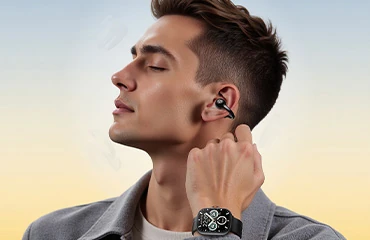
AI glasses, smartwatches, AI headphones, pocket cameras, desktop robots… Walking through the various electronics markets of Huaqiangbei, lightweight, intelligent, and increasingly affordable AI hardware is becoming a new choice for young consumers to browse, try, and even "buy one on the spur of the moment" while shopping.
If the "first cup of milk tea in autumn" represents an emotional investment, then the "first AI hardware in autumn" in Huaqiangbei represents a fresh experience of future living.
From "One Cup in Autumn" to "One Piece in Autumn": Tech Products Embrace "Self-Indulgent" Attributes
Wear AI glasses and immerse yourself in the charm of images; hold a pocket camera and record your rich life anytime; gently summon a desktop robot, and it becomes your intelligent companion on your desk… In today's Huaqiangbei, electronic products are no longer just the "big-ticket items" like mobile phones and computers that people used to associate with them. With the accelerated penetration of artificial intelligence into end-user devices, a large number of products that were once considered "futuristic" are rapidly becoming smaller, lighter, and more accessible to consumers. Basic AI glasses are now priced as low as two or three hundred yuan, while smartwatches, AI headphones, and pocket cameras offer a wide price range from a few hundred to a thousand yuan. They are crossing a significant threshold: from "big-ticket items" requiring repeated parameter comparisons and careful decision-making, to "light consumption" items that ordinary young people are willing to try for novelty.
Buying a smart product that can record, shoot, translate, and provide companionship for tens or hundreds of yuan is just as effective as buying trendy toys or limited-edition drinks—it can become a way for young people to reward themselves and express their individuality. Milk tea provides emotional value; AI hardware provides technological novelty. Young people's "self-indulgent consumption" is extending from their mouths to their eyes, wrists, ears, and pockets.
From "replacing one device every year" to "trying something new anytime," AI is redefining consumer electronics.
More noteworthy is the fact that behind the "first AI hardware purchase of autumn" lies an ongoing transformation in consumer electronics.
In the past, consumer electronics purchases often revolved around durable consumer goods such as mobile phones, computers, and televisions, with a single device potentially lasting for years. However, artificial intelligence is constantly creating new product forms: AI glasses, AI headphones, AI toys, AI recording devices, desktop robots, smart rings… the boundaries of consumer electronics categories are continuously expanding.
This change is particularly evident in Huaqiangbei. Since the beginning of this year, Huaqiangbei has continuously released the "Eight AI Stars" list, showcasing a range of new products—from AI glasses, AI toys, and AI watches to AI PCs, brain-computer interfaces, dual-screen translators, desktop robots, and recording cards—that were previously confined to laboratories, exhibitions, or startup projects, are rapidly entering the market and retail shelves.
Their common characteristics are increasingly rapid iteration and increasingly refined usage scenarios.
A pair of glasses solves photography and translation, a pair of headphones incorporates an AI assistant, a small camera satisfies on-the-go recording needs, and a desktop robot provides companionship and interaction. In the past, consumer electronics aimed to "solve more problems with one device," but now more and more AI hardware is looking for a more specific need and perfecting a small scenario.
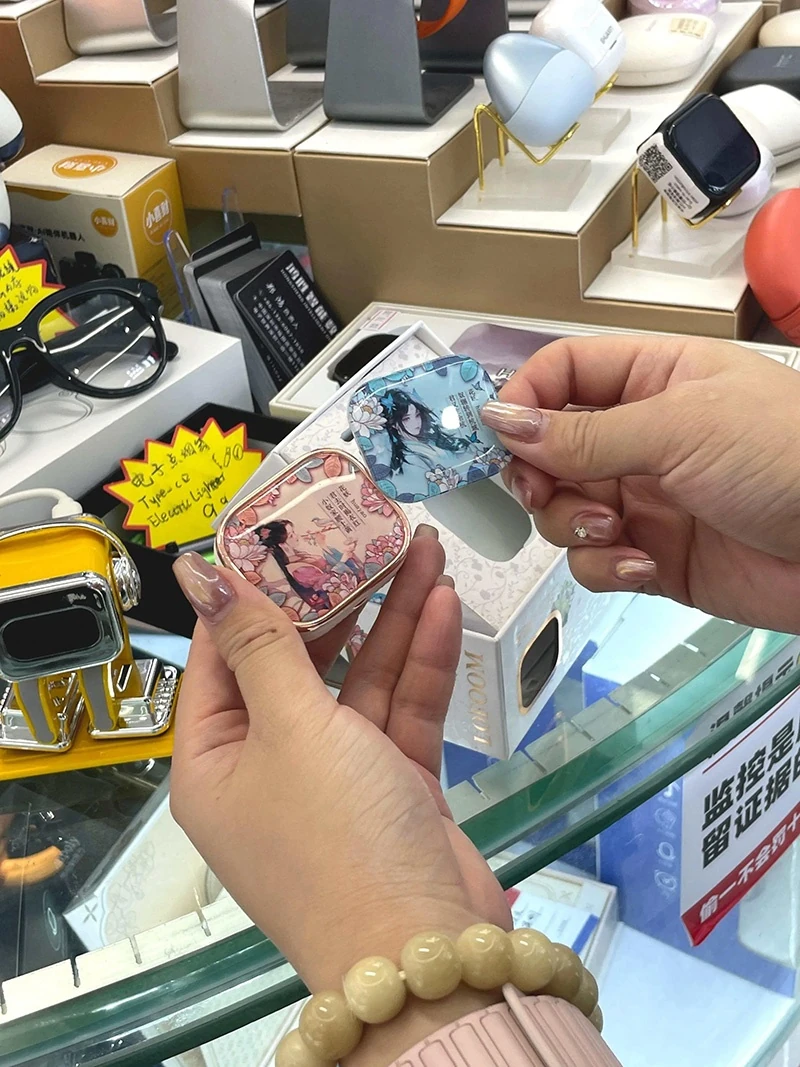
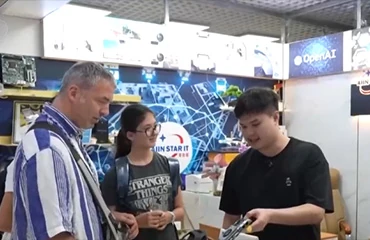
AI hardware products in the Huaqiangbei electronics market. This precisely amplifies Huaqiangbei's advantage of a "one-kilometer 'AI + hardware' full industry chain." A new demand raised by a young person today may quickly be transformed into a product idea by an entrepreneur; a new AI function can be quickly verified in Huaqiangbei by finding supply chain resources such as chips, modules, structural components, screens, and batteries; consumer feedback from the market can then be quickly transmitted back to the R&D and production stages, driving the next round of iterations.
From "designing in the morning and prototyping in the afternoon" to products quickly entering the market and undergoing testing, Huaqiangbei is becoming the "first stop" for more and more AI hardware to go from idea to product.
From selling electronic products to creating a technological lifestyle, Huaqiangbei has become the first stop for new AI products. The fact that a cup of milk tea has become a "fixed event" every year on the day of the Autumn Equinox reflects the changing consumption concepts of the younger generation. People are increasingly willing to pay for experiences, for novelty, and for emotional value.
For Huaqiangbei, this change also means new opportunities. In the past, people came to Huaqiangbei primarily to "buy electronics"; today, more and more people are coming to "see the future": watching robots box, experiencing real-time translation with AI glasses, chatting with desktop robots, trying out the latest smart wearable devices, and searching for novel products that haven't yet entered traditional shopping malls on a large scale… From a trading market to a technology experience center, Huaqiangbei's consumption scenarios are constantly evolving.
Since the beginning of this year, Huaqiangbei has continued to open up new application scenarios for high-quality productivity, promoting new products such as robots, robot dogs, unmanned retail, AI glasses, and brain-computer interfaces to first appear on the streets and in shopping malls, allowing innovative products to be tested, used, and validated by consumers first.
This is also a unique path for Huaqiangbei's development of the AI industry: instead of waiting for a product to be fully mature before entering the market, it turns real streets, real consumers, and real orders into the most direct "testing ground" for innovative products.
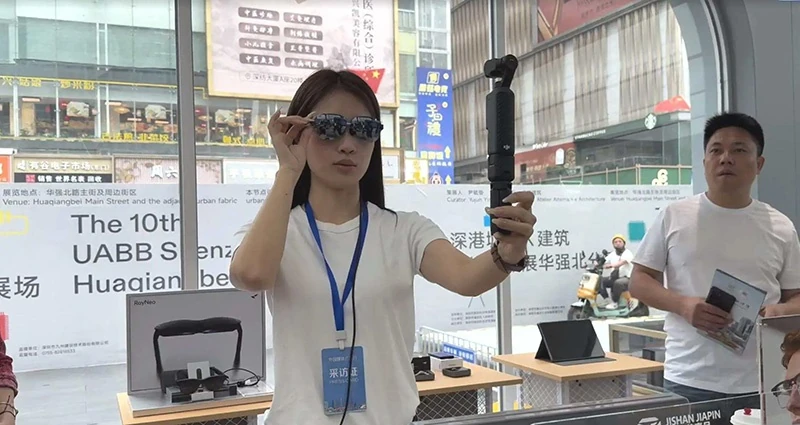
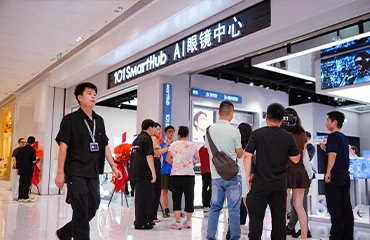
AI glasses become a popular AI hardware product in Huaqiangbei.
For entrepreneurs, this is where they can acquire their first users, their first order, and their first round of feedback; for consumers, it's where they can touch, wear, and use new products that have just "grown" from the industrial chain.
When AI is no longer just a parameter in a large model or computing power in a data center, but becomes a pair of glasses, a watch, a camera, or a robot on a table, artificial intelligence truly begins to become a part of daily life.
Huaqiangbei, with the world's densest electronics supply chain, the fastest product iteration speed, and the richest consumer scenarios, is also becoming a window to observe this change: here, the future is not necessarily expensive, nor is it necessarily far away. Often, it might just be a young person's "first AI hardware item of autumn," purchased casually while shopping.
Source: Yangcheng Evening News; Reporter: Dang Xuewei; Correspondent: Xu Jiyue
Please log in to your member account first. *
0 Comments