



By: Kevin-
On: 18 Jul 2026


| Sub-Total : | $23.30 |
| Eco Tax (-2.00) : | $4.52 |
| VAT (20%) : | $5.66 |
| Total : | $33.48 |
By: Kevin-
On: 18 Jul 2026
Time empowers the industry to better "express" itself. Recently, following six years of refinement and evolution, the 31st Shenzhen Watch Week and the 2026 Wearable Innovation Exhibition kicked off at the Futian Convention and Exhibition Center. This event marks a comprehensive upgrade in business format, transforming the traditional watch trade platform into the "WINNOTIME" full-industry-chain ecosystem platform. At the exhibition, heritage mechanical watchmaking craftsmanship and AI-driven smart wearable technology appeared side-by-side, mutually empowering one another. The event drew domestic and international business professionals to gauge industry trends, discuss collaborations, and finalize purchase orders.
Just as the hands of a clock steadily advance, the industry is upgrading toward new horizons and higher quality. Leveraging a solid industrial foundation valued at 68 billion yuan and a 95% local supply chain integration rate, Shenzhen’s watch industry continues to break boundaries, expanding deeply into new sectors such as AI algorithm development and medical-grade health monitoring. This industry showcase clearly illustrates the trajectory by which Shenzhen’s traditional industries—fueled by "new quality productive forces"—are accelerating their transition toward high-end manufacturing, advanced production capabilities, and emerging business models.
From Marketplace Trading to Full-Chain Ecosystem Integration
In its early days, the Shenzhen Watch & Clock Fair was essentially an offline marketplace for trading finished watches and components. Today, WINNOTIME has completely reshaped the industry narrative. Its three major exhibition zones—Branded Watches, Smart Manufacturing, and the newly added AI & Digital Empowerment Zone—directly address the core of the industry's transformation. The shift from competing solely on hardware to showcasing integrated hardware-software solutions has become the event's biggest highlight.
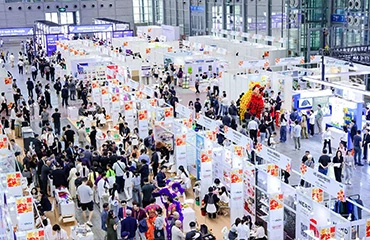
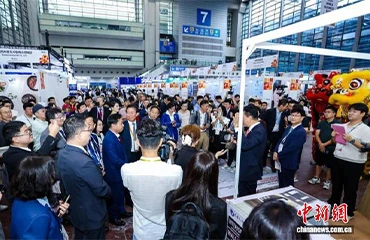
On-site, the AI & Digital Empowerment Zone showcased cutting-edge technologies such as multimodal health monitoring and spatial perception algorithms. The exhibits covered a comprehensive range of wearable devices, including smartwatches, smart glasses, smart rings, smart helmets, smart earbuds, and smart jewelry. The fair drew enthusiastic crowds; within just 20 minutes, numerous business delegations arrived to discuss technology and potential partnerships. Many cross-industry enterprises traveled specifically to the event to seek opportunities for interdisciplinary integration and growth.
Zhu Shunhua, President of both the Shenzhen Watch & Clock Industry Association and the Shenzhen Smart Wearable Industry Federation, noted that Shenzhen’s watch and clock industry has consistently prioritized innovation-driven development and iterative upgrades. He emphasized that the Shenzhen Watch & Clock Fair—a key bellwether for the industry—has evolved from a platform for simple product sales into a hub of industrial innovation that drives transformation and incubates emerging trends.
Inside the exhibition hall, the distinct profiles of the visitors offered a telling snapshot: attendees over the age of 40 clustered in the traditional exhibition zones, examining mechanical movements through transparent case backs and inquiring about power reserve durations; meanwhile, young people in their twenties and thirties gathered around AI booths, scrutinizing algorithmic precision and battery life specifications.
Here, two distinct consumer demographics and two different industrial rhythms converged; while they might appear to be parallel lines, their intersection actually fosters creative possibilities born of industry integration. Traditional watchmaking evolves on a yearly cycle, whereas smart wearables update quarterly—a disparity in pacing that presents integration challenges but also opens up new avenues for cross-sector collaboration. The exhibition serves as a high-end platform for aggregating resources, bridging information gaps, and connecting supply with demand. As Zhu Shunhua noted, given their shared origins in consumer markets and supply chains, the fusion of "fashion and technology" is unlocking fresh opportunities through the revitalized "Wearable Innovation Exhibition."
Micron-level precision manufacturing underpins the industry's successful transformation.
Shenzhen’s ability to achieve a cross-sector breakthrough is backed by solid data that reinforces its prestigious reputation as the "Watch Capital of China"—the only city in the country to have earned this title twice.
The city is home to over 1,000 watch enterprises with an annual output value of 68 billion yuan, and the local self-sufficiency rate for components exceeds 95%. Shenzhen claims seven of the nation's top ten watch companies, and domestic brands account for over 70% of sales. Its watch production represents 53% of the domestic total and 42% of the global total, while nearly 90% of the world's smartwatch hardware originates from Shenzhen factories.
Shenzhen’s "Time Valley" in Guangming District serves as a hub of industrial strength. Spanning 1.14 million square meters, the zone brings together six of the industry's top ten enterprises and hundreds of upstream and downstream suppliers. Here, artisans hone gears and hairsprings with micron-level precision—a capability that has become a key strategic asset for entering the smart wearable market. Fiyta, for instance, recorded a revenue of 3.508 billion yuan in 2025, continuously strengthening its prowess in precision manufacturing.
Meanwhile, companies that started in precision watch manufacturing—such as Lens Technology, Han's Laser, Biel Crystal, Senfeng Coating, and Chuanglong Technology—have evolved into core suppliers for the smart wearable ecosystems of Apple, Huawei, and Samsung. Brands like Behrens and CIGA Design demonstrate strong innovation capabilities, building new competitive advantages through a fusion of design and culture. Additionally, Jingrui Movement has secured multiple patents for automatic movements, marking a successful integration of precision manufacturing and AI technology.
At the exhibition, many precision mold manufacturers attended not merely to solicit orders, but to benchmark their capabilities against curved-screen packaging processes and gauge the technological boundaries of their peers.
Shenzhen’s watch and clock industry chain is moving beyond the cutthroat competition of low-cost contract manufacturing; it is ascending toward higher technological sophistication and greater value, positioning itself as a global hub for the wearable technology ecosystem.
AI Sparks New Momentum, Raising the Ceiling for the Wearable Industry
Industrial upgrading is not a solo endeavor for enterprises. Shenzhen’s favorable business environment drives the continuous transformation and upgrading of the watch industry, effectively raising the growth ceiling for the smart wearable sector.
A few years ago, Shenzhen incorporated the watch industry—part of the broader modern fashion sector—into its "20+8" industrial cluster strategy, ramping up investment in smart assembly lines and health-monitoring sensors for wearables. In 2025, the city released an action plan for the AI terminal industry, targeting a market scale exceeding 800 billion RMB by 2026; simultaneously, it introduced vouchers for computing power, training data, and AI models to lower the costs of AI adoption for small and medium-sized enterprises.
Aiming to become the "No. 1 City for AI Glasses," Shenzhen is focusing on applications such as spatial perception and non-invasive health monitoring—innovations that resonate with the cutting-edge products showcased at the Wearable Park innovation hub. Experts note that wearables are evolving from mere consumer gadgets into medical-grade data infrastructure, with technologies for heart rate, ECG, and non-invasive blood glucose monitoring rapidly entering the market.
Competition in the smart wearable sector has shifted away from the mere stacking of features toward a contest of data precision and AI interpretation capabilities. The industry has adopted a strategy of "seeking common ground while respecting differences": sharing foundational technologies like sensors and AI algorithms, while diversifying product forms. Smartwatches continue to grow steadily, while smart rings, AR glasses, and smart earbuds carve out niche markets; this coexistence of diverse products is expanding the industry's horizons.
A single wristwatch encapsulates a city's history of industrial evolution. In the past, Shenzhen secured a foothold in the global watch market through a comprehensive precision manufacturing chain; today, leveraging AI and "new quality productive forces," it is breaking down traditional industrial barriers, transforming from a simple watch manufacturer into a provider of intelligent human-centric terminal solutions.
Source: Shenzhen News Net | Wu Dequn, Reporter for Shenzhen Special Zone Daily


Please log in to your member account first. *

0 Comments