



By: Mack-
On: 10 Jun 2026


| Sub-Total : | $23.30 |
| Eco Tax (-2.00) : | $4.52 |
| VAT (20%) : | $5.66 |
| Total : | $33.48 |
By: Mack-
On: 10 Jun 2026
On the afternoon of May 28, the “Bringing Ideas to Life, Connecting with Capital—AI Hardware Pitch Salon” was successfully held in Bao’an, Shenzhen. Co-hosted by NewHardSee, the Shenzhen Internet of Things Industry Association, IoT Media, IOTE, and AGIC, the event focused on connecting AI hardware innovation with industrial capital. It attracted approximately 80 industry professionals, including seven AI hardware innovation project teams and over 30 guests from the investment community representing investment firms, industrial capital firms, and ecosystem platforms.
Currently, AI technology is rapidly moving from the model layer to end-user hardware, with sectors such as AI glasses, smart wearables, robots, and AI agents continuing to gain momentum. The industry chain is also undergoing a critical transition from “proof of concept” to “productization and commercialization.” This roadshow salon aims to provide a more efficient communication platform for AI hardware startup teams through project presentations, capital exchanges, and industry resource matching, while also offering investment firms a window into industry trends and innovative projects.
Capital institutions attending this event include Shenzhen Ruiyue Investment Holding Group, Lute Innovation, Yansong Capital, Interna Investment, Yingli Capital, Futian Industrial Investment, Kunshan Capital, and Lihua Finance.
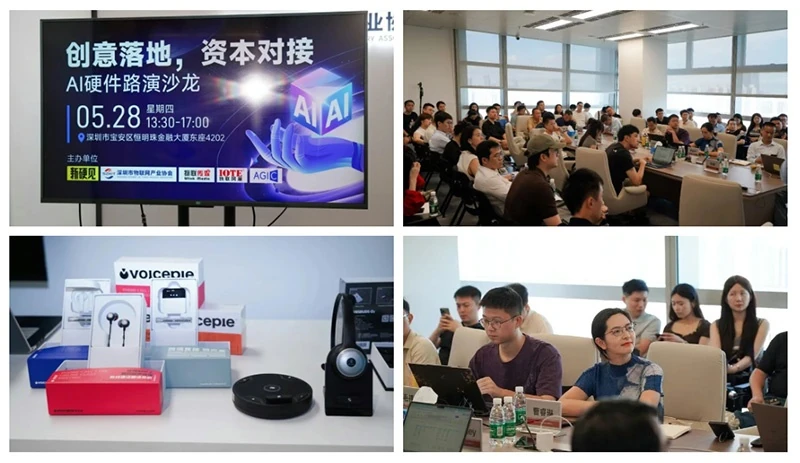
Organizer’s Remarks: AI Hardware Enters a Phase of Accelerated Industrialization
At the start of the event, Yang Weiqi, Executive President of the Shenzhen Internet of Things Industry Association and General Manager of Shenzhen IoT Media Co., Ltd., delivered the opening remarks.
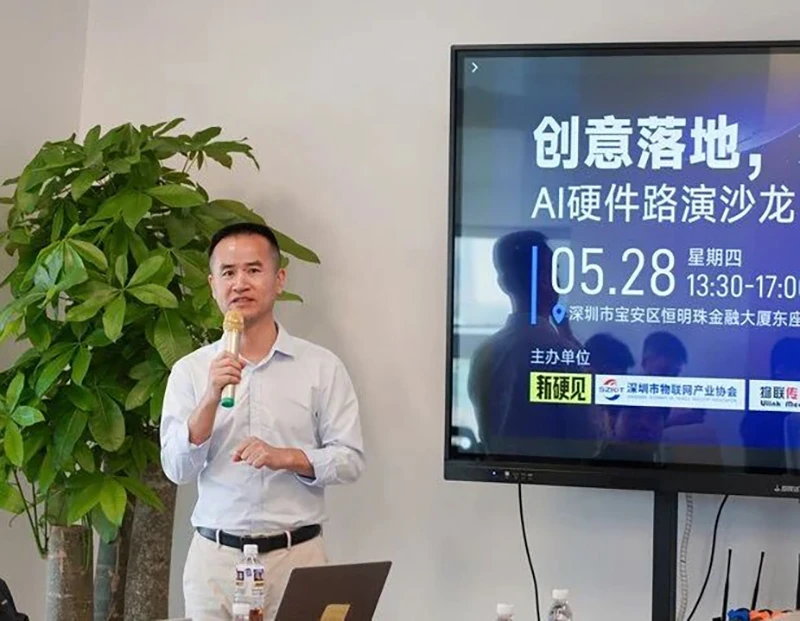
Yang Weiqi noted that artificial intelligence is at the center of a new wave of industrial development, and this year holds special significance as it marks the 70th anniversary of the concept of “AI.” The Shenzhen Internet of Things Industry Association will continue to serve as a “partner” and “catalyst” for the industry. Currently, the association’s operations span multiple sectors, including industry association management, media communications, industry research, and exhibition services. It has long focused on the development and industrial integration of artificial intelligence, the Internet of Things, and embodied intelligence.
In closing, Yang Weiqi expressed his best wishes for the successful hosting of this AI Hardware Roadshow Salon. He hoped that project teams would fully showcase their innovative achievements and looked forward to investment firms discovering more high-quality projects, thereby jointly driving the sustainable development of Shenzhen’s AI hardware industry ecosystem.
Seven Major Projects Take Center Stage
Next, seven AI hardware innovation teams took the stage one after another to present their projects, covering a range of hot sectors including AI earbuds, smart rings, home robots, AI pet hardware, robot operating systems, industrial robots, and AI wearable platforms.
Presentation 1: The World’s First Call-Translation Earbuds
Speaker: Zhou Chao, CEO & System Architect, Sound of Wonder AI Co., Ltd.
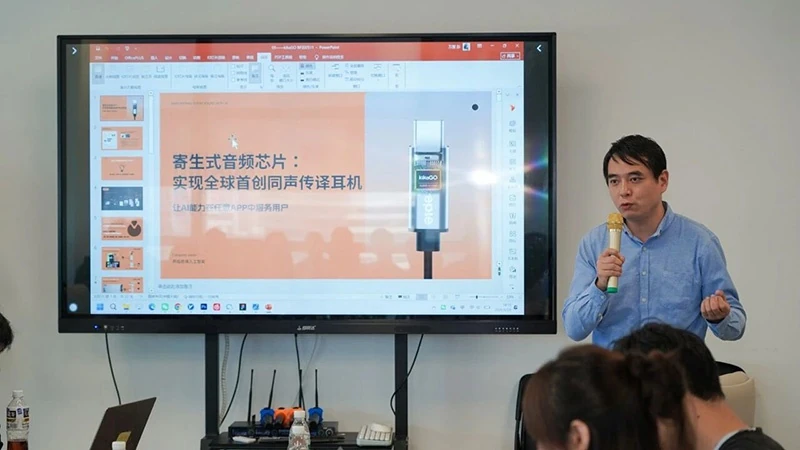
Zhou Chao noted that while the capabilities of AI models are rapidly improving, the widespread adoption of AI in the consumer market still faces a key obstacle: “cross-application services.” When using AI tools, users often have to frequently copy, paste, and move content between different apps, and this sense of fragmentation becomes even more pronounced when dealing with audio and video streams. To address this issue, SoundScape has chosen to tackle the problem at the hardware level by developing its own AI chip, with the goal of enabling AI capabilities to integrate seamlessly into any app or scenario, much like a keyboard input method.
According to the company, its core technology is an AI chip designed for mobile and computer peripherals. Through hardware devices such as headphones, microphones, and keyboards, this chip enables the cross-application transfer of AI-powered audio and video streams. Leveraging this capability, the team has launched an AI simultaneous interpretation headset and has already partnered with companies such as iFlytek. During the event, Zhou Chao demonstrated the device’s real-time two-way translation capabilities in scenarios including regular phone calls, WeChat, and conference software via a live phone call—without requiring the other party to install any software or hardware.
He believes that the essence of AI hardware lies not in simply adding an “AI” label, but in genuinely solving the problem of how AI services can integrate into existing application ecosystems. Rather than “creating a new entry point,” the team aims to serve as the “last mile” connecting large AI models with real-world application scenarios through low-threshold hardware.
Currently, the product has been commercially deployed in scenarios such as cross-border e-commerce, foreign trade, overseas live streaming, and distance education, gradually evolving from an “AI toy” into a tool-based product with practical productivity value.
Roadshow 2: Finger Agent Smart Ring
Speaker: Charley, Founder & CEO of Nuoyi Innovation (Shenzhen)
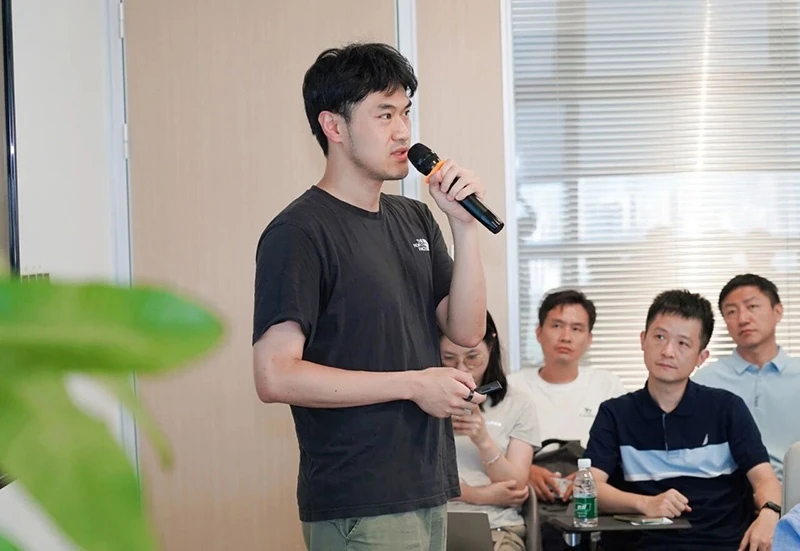
Charley noted that most smart rings currently on the market focus on health monitoring, whereas the team’s product, Spark Ring, is a smart voice ring designed for AI-native interaction scenarios. It is also one of the first rings globally to support real-time voice agent interaction and feedback. The team aims to seamlessly integrate AI into users’ daily work and life through more natural, low-distraction interaction methods.
Spark Ring emphasizes “invisible recording” and AI assistant capabilities. In scenarios such as meetings, communications, and mobile office work, users can record for extended periods using only the ring—without needing to open their phones or separate recording devices—and automatically generate meeting summaries, to-do lists, and schedules. Additionally, the product integrates with tools like Google Calendar, Apple Calendar, and Todo List to further boost work efficiency.
Through extensive user research, the team discovered that “quick note-taking” is a common pain point in the workplace; many users frequently see their efficiency hindered by the inability to promptly capture ideas, tasks, or meeting details. Therefore, SparkRing aims to become the “personal AI assistant” for white-collar professionals and, in the future, leverage its Agent capabilities to enable more complex interactions such as proactive reminders and task execution.
Regarding the team, Charley previously led Agent Evaluation efforts at ByteDance’s Seed Large Model Team and possesses a full-stack R&D background in both AI and hardware. Currently, the Nuoyi Innovation team has grown to over 20 members, and the product has entered mass production. It made its debut in overseas markets during this year’s CES, garnering significant attention from tech influencers. Moving forward, the team plans to further expand into the North American market and continue exploring AI-native hardware in the realm of multimodal interaction.
Roadshow 3: Damon AI Home Assistant Robot
Speaker: Sophie, Business Manager at Damon Technology
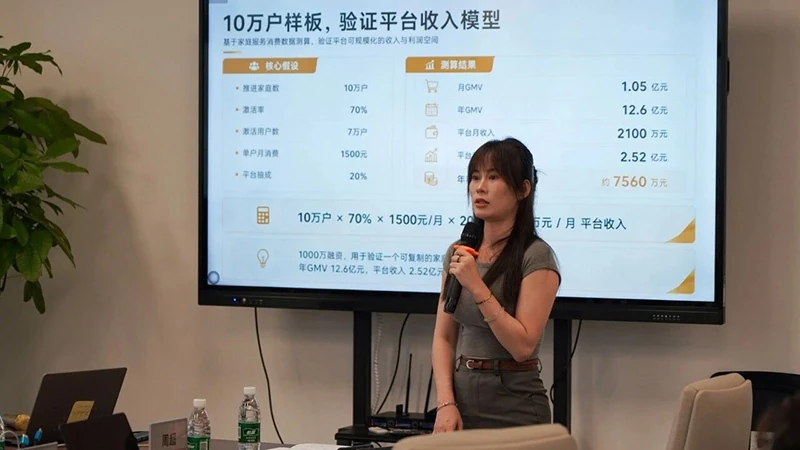
Sophie pointed out that in today’s home environments, needs such as elderly health management, housekeeping services, and property maintenance are highly fragmented, yet there is no unified platform to integrate and coordinate them. The core value of the Damon robot lies in transforming these fragmented needs into actionable service orders and completing the closed-loop process from “need identification” to “service fulfillment.”
In terms of application scenarios, the team initially focused on the elderly care and healthcare sectors. The product is equipped with millimeter-wave radar technology that can monitor the elderly’s heart rate, breathing, and sleep patterns within a 5- to 10-meter range, and send alerts to children or emergency contacts in case of abnormalities. Additionally, the product supports voice interaction to assist with tasks such as medication reminders and service appointments. It further extends to community services and daily consumption scenarios, such as enabling one-click ordering of daily necessities like coffee and takeout by connecting with nearby merchants.
In terms of product logic, the team aims to position the robot as a “home AI front end”—a central hub connecting household users with the local service ecosystem—thereby establishing a sustainable service distribution capability rather than relying solely on one-time hardware sales revenue. Its business model includes hardware sales, service revenue sharing, and revenue-sharing mechanisms with property management companies and healthcare institutions.
In terms of implementation, the company plans to first partner with property management groups and healthcare chains to enter households through B2B channels, then gradually expand its user base and validate a sustainable service revenue model. The product has already achieved some commercial progress in both off-the-shelf and customized AI solutions and plans to conduct large-scale validation through property management scenarios.
In terms of implementation, the company plans to first partner with property management groups and healthcare chains to enter households through B2B channels, then gradually expand its user base and validate a sustainable service revenue model. The product has already achieved some commercial success in the areas of motherboards and customized AI solutions, and the company plans to conduct large-scale validation through property management scenarios.
Roadshow 4: AI-Native Smart Pet Pendant
Speaker: Cao Ruilin, Co-founder of AUREN
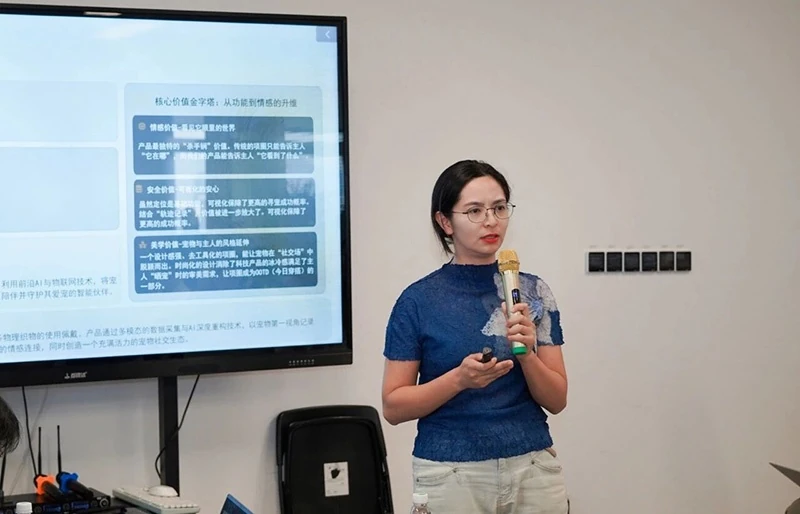
Cao Ruilin pointed out that AUREN’s core philosophy is the “integration of technology, ecology, and aesthetics,” and the company hopes to build a more comprehensive digital expression system for pets through AI multimodal capabilities. The team views pets not merely as functional companions but as vital emotional members of the family. Consequently, product design has centered on “emotional value” from the outset, emphasizing the emotional bond between humans and pets as well as the daily companionship experience.
Functionally, the product uses a wearable pet pendant to continuously monitor the pet’s behavior and environment. By combining visual, audio, and motion data, it constructs a multimodal data stream for the pet and further develops a “pet memory system.” Users can not only monitor their pets’ status in real time but also track behavioral changes—such as activity levels, emotional states, and health anomalies—through historical data, enabling earlier health alerts. Additionally, the product features content generation capabilities, automatically creating daily comics or vlogs of the pet that can be shared on social media.
The team believes that the current pet hardware market is largely concentrated on basic categories such as feeders and water dispensers, while there remains a significant gap in AI-native hardware focused on “lifestyle documentation and emotional companionship.” In terms of business models and ecosystem development, AUREN plans to build a niche pet community and content platform, extending into broader application scenarios such as healthcare, insurance, and digital avatars through AI Q&A, a developer ecosystem, and digital twin capabilities. In the future, pet data can be further utilized for health management and the development of industry service systems.
In terms of market strategy, the team will enter overseas markets through crowdfunding channels such as Kickstarter, while simultaneously establishing an independent website and an offline distribution network. They have already received initial feedback from markets across the United States and Europe. Regarding financial planning, the product is expected to achieve stable shipments in the second half of this year and reach a scale of 100,000 units by next year.
Roadshow 5: BIM—A General-Purpose Operating System for Robot Brains
Speaker: Gong Xiaobo, CEO of Shenzhen Tuwan Information Technology Co., Ltd.
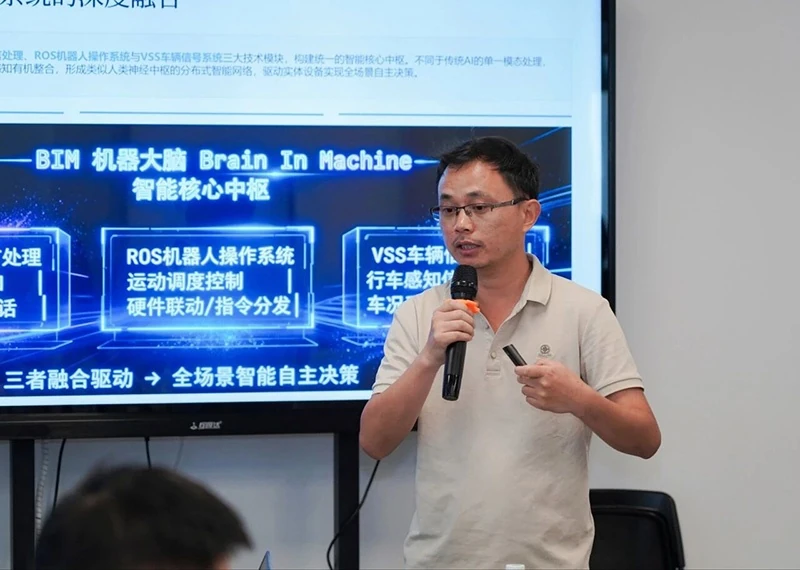
Gong Xiaobo noted that current mainstream robot systems (such as ROS) and traditional intelligent systems still face significant limitations in semantic understanding and cross-scenario decision-making capabilities. While large language models have improved language comprehension, they remain difficult to directly apply to real-time interaction with the physical world and the execution of autonomous behaviors. Therefore, the team has proposed a “concept node network” that integrates multiple technical approaches. This network unifies visual, linguistic, and environmental signals into structured concepts and connects them to form a robot’s cognitive and behavioral system.
The core objective of this system is to endow robots with capabilities closer to “autonomous decision-making”—that is, the ability to independently determine action paths based on sensory information in complex environments, rather than relying on human commands or remote control. For example, in a home setting, the system can execute tasks and provide reminders based on the user’s identity and behavioral habits; in a single-occupant scenario, it can detect abnormal conditions and trigger emergency contacts; and in a retail environment, it can perform roles such as reception, sales guidance, and basic operational support.
The system does not rely on large cloud-based models but can run locally in a lightweight manner, achieving inference and control capabilities through predefined conceptual structures and behavioral logic, thereby making it compatible with low-cost hardware devices. This approach aims to lower the barriers to implementing embodied intelligence, enabling robots to be rapidly deployed in real-world settings such as homes and commercial spaces.
Currently, the project remains in the early product validation phase. The team has completed the design of the operating system’s underlying framework and plans to conduct closed-loop commercial validation through scenarios such as retail stores to demonstrate its feasibility and scalability in real-world environments. Meanwhile, patents have been filed to protect the core technologies related to behavioral neural networks.
Roadshow 6: Unitra Robotics — Setting a New Standard for the Industrial Workforce
Speaker: Hao Zhichao, COO / Head of Operations, Shenzhen Lijin Technology
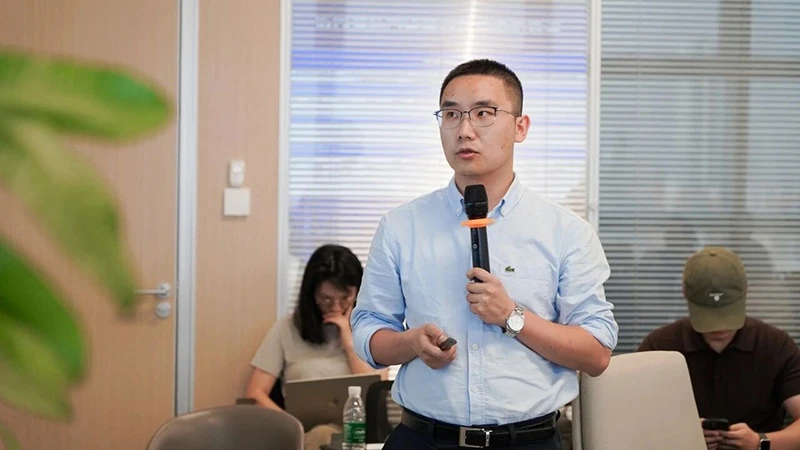
Hao Zhichao noted that the project originated from an internal incubation initiative at Shenzhen Lijin Technology. Backed by a Hong Kong-listed group with a 40-year history, the company has established a world-leading manufacturing base in the die-casting and injection molding machine sectors and serves numerous leading enterprises, including Tesla and the new energy vehicle supply chain.
The manufacturing industry is currently shifting from large-scale, single-product production to a flexible manufacturing model characterized by multiple product varieties and small batch sizes. While industrial automation has reached a relatively mature stage, there remains a “last-mile” gap in PCBA assembly, high-risk operations, and complex labor-intensive scenarios. Uniterra’s goal is precisely to fill this gap, making humanoid robots the infrastructure for flexible industrial production.
Its product portfolio includes wheeled dual-arm humanoid robots, three-fingered dexterous grippers, and industrial intelligence systems. The wheeled humanoid robots are primarily designed to replace human operators in die-casting and injection molding production lines, as well as to automate downstream manufacturing processes; the three-fingered dexterous gripper utilizes a palm-shaped structure and vision-haptic fusion algorithms to enhance the grasping capability of irregularly shaped parts while controlling costs, with mass production planned for the second half of the year; The industrial intelligent agent serves as the “industrial brain” for data and process decision-making, providing modular production optimization solutions.
The team emphasizes leveraging the supply chain advantages inherent to the manufacturing sector to reduce hardware costs, thereby achieving a return on investment within one year. Positioned as the “new standard for industrial labor,” the company aims to drive the large-scale deployment of robots in industrial settings.
Roadshow 7: AI Outfit-Planning Platform—The World’s First AI-Powered Mirror-Mounted Hardware
Speaker: Zhang Runzhe, Founder & CEO
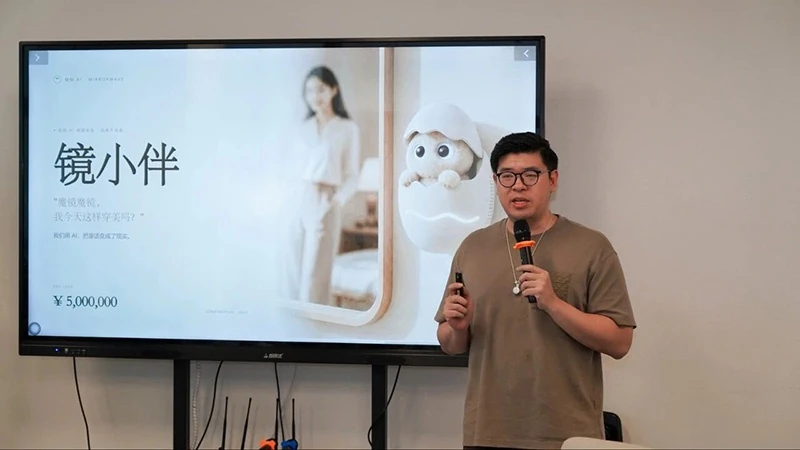
Zhang Runzhe pointed out that mirrors are a frequently used yet long-neglected entry point in daily life. This is particularly true for women making outfit decisions before heading out, as they interact with full-length mirrors for an average of 10 to 30 minutes each day. However, this scenario has not yet been effectively enhanced by the internet or AI. Based on research into content from communities like Xiaohongshu, the team identified “outfit anxiety” as a widespread consumer pain point, manifested in issues such as having too many clothes yet still feeling “nothing to wear,” difficulty making decisions for important occasions, and the strong emotional connection to one’s outfit.
The project enters this scenario through a combination of “mirror-side AI hardware + digital wardrobe app”: the hardware is installed as a lightweight device on the side of the mirror, enabling seamless recognition and interaction while the user looks in the mirror. It provides emotional feedback and outfit encouragement, automatically records the user’s complete outfit information for the day, and breaks it down into structured data in the cloud to build a personal digital wardrobe. Simultaneously, the system uses long-term outfit data to create a personalized style profile, offering continuous outfit recommendations and companionship services, aiming to become a “personal stylist.”
The team believes its core competitive advantage lies in the closed-loop data capabilities enabled by high-frequency, natural mirror-front behaviors, distinguishing it from traditional outfit apps that rely on manual user input. In terms of business model, the product uses a 699-yuan hardware device as an entry point, supplemented by membership services, a content ecosystem, and future brand collaborations. The founder emphasizes that the project does not aim to create aesthetic anxiety but rather to reconstruct the styling experience by “understanding users rather than changing them”—achieved through unlocking the value of existing wardrobes, reducing unnecessary consumption, and boosting self-confidence.
In Closing
Following the roadshow, the event featured a session for informal networking and resource matching. Multiple investment firms, industry chain enterprises, and project teams engaged in in-depth discussions on topics such as product design, business models, supply chains, market implementation, and financing plans.
As evidenced by the projects presented, the AI hardware industry is shifting from single-point functional innovations toward the development of more comprehensive product experiences and scenario-based capabilities. At the same time, the capital market is showing increasing interest in AI hardware projects that “truly possess the ability to be implemented.”
Moving forward, NewHardSee will continue to collaborate with industry partners to foster efficient connections among entrepreneurs, industry resources, and capital in areas such as AI hardware, robotics, smart wearables, and embodied intelligence, working together to explore new opportunities in the AI hardware industry.
Source: Shenzhen Internet of Things Industry Association
Please log in to your member account first. *

0 Comments