

By: Jo Van-
On: 09 Nov 2026


| Sub-Total : | $23.30 |
| Eco Tax (-2.00) : | $4.52 |
| VAT (20%) : | $5.66 |
| Total : | $33.48 |
By: Jo Van-
On: 09 Nov 2026
Short answer: sourcing AI smart glasses in 2027 comes down to five decisions made in the right order — product route (audio, camera-AI or AR), customization depth, OEM versus ODM engagement, MOQ and sampling plan, and the compliance-plus-QC file you require before mass production. Brands that lock these five items before issuing a purchase order spend far less on rework and reach the market with a product that survives retail scrutiny.
This guide is written for brand owners, distributors, e-commerce sellers and procurement teams buying wholesale smart glasses. It explains how each product route behaves commercially, what you can realistically customize, and how to structure sampling, certification and quality control so your supplier conversations stay factual.
Three shifts matter to buyers. First, AI workloads are split between the glasses and a companion app, so the phone application is now part of the product, not an accessory. Second, camera privacy expectations have hardened, and buyers are increasingly asked to show recording indicators and data-handling policies rather than just a spec sheet. Third, the supplier base has widened, which means more quotations but also more variance in engineering depth.
The practical consequence: evaluate suppliers on process evidence — sample discipline, documentation, test records — rather than on a feature list alone. Browse the current AI Glasses collection to see how routes are typically merchandised before you define your own line.
Open-ear speakers, a microphone array, touch or capacitive controls and an optional status LED. This is the most accessible route: the mechanical build is simpler, tooling investment is lower, and the value proposition — hands-free audio, calls and voice assistant access — is easy to explain at retail or in a B2B catalogue. AI features are usually delivered through the companion app: speech assistant integration, live translation, notification reading and meeting capture where the platform allows it.
Best fit for distributors, corporate gifting programmes, audio accessory brands and marketplace sellers who need predictable volumes and short development cycles. The main engineering risks are sound leakage at higher volumes, wind noise on calls and battery behaviour under continuous streaming.
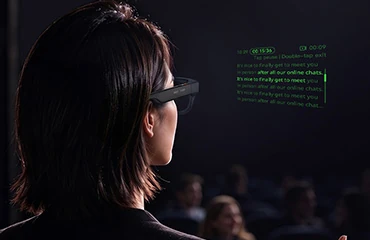
Adds an image sensor and an AI pipeline for capture, object recognition, text reading or guided workflows. Commercially this is the fastest-growing category for content creators, field-service tooling and social-first brands, but it carries the heaviest diligence burden: recording indicators, bystander awareness, local law on wearable recording, cloud inference costs and thermal management during sustained capture.
Ask suppliers to describe where inference happens — on-device, on the phone, or in the cloud — because that answer drives your privacy policy, your app store data disclosures and your operating cost per user.
Adds an optical display, typically monocular or binocular, using waveguide or reflective optics. Development is measured in quarters rather than weeks, non-recurring engineering is substantial, and MOQs are driven by optics and display sourcing. AR also demands content: without a reason to look at the display, the product becomes a specification without a use case.
Choose AR when you control a workflow or content ecosystem — industrial instructions, telepresence, navigation, training — and can fund a staged engineering programme. For catalogue expansion or gifting, it is usually the wrong first step.
| Route | Typical buyer | Build complexity | Customization depth | Primary risk to manage |
|---|---|---|---|---|
| Audio | Distributors, gifting, audio brands, marketplace sellers | Low to medium | Branding, packaging, tuning, app shell | Acoustic quality and battery claims |
| Camera-AI | Creator brands, field-service tooling, premium retail | Medium to high | Firmware, AI models, app, privacy features | Privacy compliance and thermal performance |
| AR display | Enterprise solutions, industrial integrators, funded startups | High | Optics, platform, SDK, content pipeline | NRE, timeline and ecosystem readiness |
Suppliers quote very different prices for the same phrase, so define customization in levels and confirm which one your quotation covers.
Level 1 — Cosmetic: logo, colour, frame finish, temple print, packaging, carry case, cable and manual. Lowest MOQ, fastest turnaround, and often enough for distributors testing a category.
Level 2 — Mechanical and electrical: frame geometry, hinge, lens shape, speaker tuning, microphone placement, battery capacity, button layout, charging interface. Requires tooling or at least engineering change control.
Level 3 — Firmware, app and AI stack: white-label companion app, onboarding flow, account system, OTA update path, wake words, model selection, data routing and retention settings. This is where most of the differentiation now sits.
Level 4 — Platform change: a different chipset or optical engine. High NRE, long timelines, and rarely justified below substantial annual volume.
Whichever level applies, confirm in writing who owns the tooling, the firmware source and the app code, and what happens to them if the relationship ends.
OEM means you bring the specification and the supplier builds to it. You keep more control and more IP, but you carry engineering cost and validation responsibility. ODM means you adopt a supplier platform and customize on top of it — the fastest path to market for most brands. White label is the lightest form of ODM: existing hardware, existing app, your branding only.
Ask every candidate three questions: which parts of the stack are yours, which are theirs, and what documentation transfers with the project. If a supplier cannot describe their firmware update process or produce a component-level build of materials, treat that as a signal about their engineering depth rather than a paperwork gap.
MOQ is rarely arbitrary. It usually reflects shell tooling amortization, printed circuit board assembly runs, minimum order quantities on components such as sensors and displays, lens and optics purchasing, packaging print runs, and the batch size required for reliable pre-production validation.
A practical MOQ conversation covers:
The MOQ per SKU, per colour and per configuration — they are often different.
Whether MOQ falls after the first order, and at what volume.
Whether tooling is charged separately or amortized into unit price.
Spare-parts ordering: temples, nose pads, cables and packaging.
On sampling, expect staged builds: an engineering sample to prove the concept, a design-validation build to test the full assembly, and a production-validation build manufactured on the intended line. Sign a golden sample from that final stage, keep a duplicate, and reference it in the purchase contract. A sample built by hand in an engineering lab is not evidence of mass-production quality.
| Parameter | Why it matters | What to ask for |
|---|---|---|
| Acoustic performance | Leakage and call clarity define reviews | Test conditions, volume levels, microphone array layout |
| Battery behaviour | Headline numbers rarely match real use | Capacity, playback and standby figures with the test method stated |
| Connectivity | Pairing stability drives returns | Bluetooth version and stack, multi-point behaviour, reconnection logic |
| Camera and AI pipeline | Defines privacy and cost | Sensor choice, recording indicator behaviour, where inference runs |
| Thermal design | Sustained capture causes throttling | Continuous-recording behaviour without active cooling |
| Fit and weight | Comfort determines daily wear | Weight per temple, adjustability, prescription lens compatibility |
| Ingress protection claim | Common source of disputes | The exact rating claimed and the test report supporting it |
Never accept a logo on a supplier website as proof of compliance. Request certificates and test reports that name the actual manufacturing entity, state the report scope and model numbers, and remain valid for your shipment date. Depending on your target markets and the product configuration, the file typically covers radio and electromagnetic compatibility, electrical safety, battery transport documentation, restricted-substance declarations, and packaging or e-waste obligations. Bluetooth and other wireless marks may require your own listing as the brand owner.
For camera models, privacy diligence sits alongside certification. Confirm that recording indicators cannot be disabled in firmware, that data retention is documented, that any cloud processing has a named processor and region, and that your app store data-safety disclosures match what the app actually collects. If you sell into regulated markets, ask for the supplier's data processing terms in writing. General product information is available on our Products page; confirm specifics per model with your account contact rather than assuming a claim transfers between SKUs.
Define quality control before the first production run, not after the first complaint. A workable framework includes an agreed inspection standard, a written test list, and four inspection points: incoming components, in-process assembly, final functional test, and pre-shipment inspection on packed cartons.
Functional: pairing, audio sweep, microphone capture, camera image check, touch response, OTA update.
Reliability: charging cycles, hinge cycles, drop, sweat and abrasion, temple flexure.
Cosmetic: limit samples for paint, printing and lens clarity.
Documentation: serial-number traceability and a retained golden sample.
Lead time is the sum of sample rounds, tooling, component procurement, production, QC and freight — plus certification if it runs after the build. Plan a buffer, split shipments for launch markets, and order spare parts with the first batch. Ask for the critical-path items in writing; suppliers who can name their long-lead components are usually the ones who can hold a date.
Can they explain the product architecture without reading from a brochure?
Do they offer staged samples with a signed golden sample process?
Can they produce a component-level bill of materials and approved-vendor list?
Is the firmware update and security-patch path documented?
Who owns tooling, app code and model weights?
Which certifications do they hold for this exact model, and who is the applicant?
What is their stated AQL and pre-shipment inspection routine?
How do they handle engineering change notifications?
Can they support spare parts and after-sales replacement for the product lifecycle?
Are references from comparable brand or distributor projects available?
MOQ depends on the route and the customization level, not on a universal number. Cosmetic-only audio projects sit at the low end; camera-AI and AR configurations rise sharply because of optics, sensors and tooling. Ask for MOQ per SKU and per colour, and clarify whether tooling is amortized or invoiced separately.
Yes, through a white-label or configuration-layer arrangement, where your branding, onboarding and feature toggles sit on the supplier's app framework. If you need deeper control — your own account system or data pipeline — negotiate source-code access or a build-handover clause before development starts.
Timelines vary with the route and the number of change requests. Audio projects typically move quickly through a single validation cycle; camera-AI needs extra time for image tuning; AR requires optical alignment and often multiple iterations. Ask the supplier to map their sample stages and quote each one separately so you can see where the schedule risk sits.
That depends on your sales markets and the wireless, battery and camera configuration of the product. The supplier's existing reports are a starting point; you still need to confirm the certificates cover the exact model you are importing and that the applicant details are consistent. Take local regulatory advice for your destination markets.
Insist on a hardware-linked recording indicator that firmware cannot disable, document where inference and storage occur, and align your app store disclosures with actual data collection. Where cloud processing is involved, name the processor and the hosting region in your own privacy notice.
Bring your route, target markets, expected first-order volume and required customization level, and we will map them against suitable platforms, sampling stages and documentation requirements. Review the AI Glasses collection and available products first, check the FAQ for common process questions, then contact our team to request an OEM/ODM quotation and a sampling plan for your 2027 line-up.
Please log in to your member account first. *



0 Comments