
By: Mack-
On: 13 May 2026



| Sub-Total : | $23.30 |
| Eco Tax (-2.00) : | $4.52 |
| VAT (20%) : | $5.66 |
| Total : | $33.48 |
By: Mack-
On: 13 May 2026
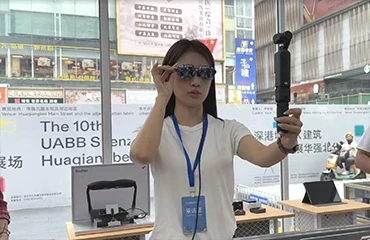
“With the government subsidy on top, I saved hundreds of yuan—it’s a real bargain.” At noon on May 9, at Doctor Eyewear’s first-ever smart glasses concept store in Shenyue Shangcheng, Mr. Zhou, a local resident, tried on a popular model of AI glasses and decided to buy them on the spot. He told a reporter that he had long been interested in the glasses’ features, such as text-to-speech, voice recording, and translation. “After trying them on, I found them quite lightweight, and since I could take advantage of the subsidy, I went ahead and bought them.”
Smart glasses, once a “niche novelty” among wearable devices, have become a hot item in the consumer upgrade trend, driven by government subsidy policies.
During recent visits to several 3C electronics stores and brand experience shops in Shenzhen, this reporter learned that as technology rapidly evolves, factors such as wearing comfort, practical functionality, and optimized weight are collectively driving the consumption scenarios for smart glasses from “early adoption” to high-frequency areas like daily commuting, entertainment and leisure, office work, and outdoor sports. At the same time, Shenzhen’s consumer goods trade-in policy this year included smart glasses in the subsidy scope for the first time, which has also greatly stimulated consumer demand for smart glasses.
“We often have customers coming into the store specifically to inquire about smart glasses.” In the audio section on the first floor of the JD.com Mall in Nanshan, Shenzhen, shelves are stocked with various models of smart glasses, including AR smart glasses and AI glasses. Staff members noted that compared to earlier head-mounted AR devices, smart glasses are becoming increasingly lightweight, and price barriers are gradually lowering. With government subsidies applied, some models have a final price of around 1,000 yuan, which remains quite attractive.
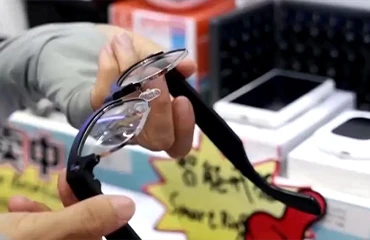
At Doctor Eyewear’s first national smart glasses concept store, this reporter observed that more than a dozen smart glasses brands—including LeEco, Qianwen, and XREAL—were on sale. Depending on their functional features, prices ranged from 500 to 5,000 yuan, catering to a wide spectrum of needs from entry-level experimentation to advanced geek experiences.
“Government subsidy policies have had a significant boost on the smart glasses industry,” said Mr. Shi, the manager of the concept store. “With the government subsidy, prices drop by several hundred yuan, which has effectively increased our conversion rate. Our store also offers on-site prescription fitting. After the subsidy, a pair of prescription smart glasses is more cost-effective than buying a regular pair of glasses and a separate pair of headphones, so many customers place their orders on the spot.”
At a duty-free store in Shenzhen, not far from this shop, the AI glasses displayed in the eyewear section caught the attention of several Hong Kong tourists. After trying them on, asking questions, and comparing options, one of them decided to make a purchase. “Hong Kong tourists really like the smart glasses’ camera features and voice announcements. They offer a comfortable wearing experience and are competitively priced,” a salesperson told the reporter. Hong Kong consumers can not only enjoy both national and store subsidies but also receive tax refunds upon departure, making the overall deal very attractive.
Beyond policy incentives, advancements in product technology, along with improvements in lightweight design and practicality, have made smart glasses a new favorite among the general public, with consumers spanning all age groups.
“Young people who love trying new things pay close attention to tech products like smart glasses and head straight for them when they visit the store. Office workers and travel enthusiasts place greater emphasis on practicality, with features such as simultaneous interpretation, navigation, teleprompter functions, and AI meeting minutes being particularly popular.” ” The manager of Doctor Eyewear’s first national smart glasses concept store noted that during the May Day holiday, customers came in a steady stream to experience the smart glasses. Many customers who originally came to shop for traditional eyewear were also drawn to the smart glasses, actively trying them on and experiencing their features, which further boosted overall engagement and the shopping atmosphere.
Source: Shenzhen Special Zone Daily
Please log in to your member account first. *


0 Comments