
By: Kevin-
On: 21 Jun 2026





| Sub-Total : | $23.30 |
| Eco Tax (-2.00) : | $4.52 |
| VAT (20%) : | $5.66 |
| Total : | $33.48 |
By: Kevin-
On: 21 Jun 2026
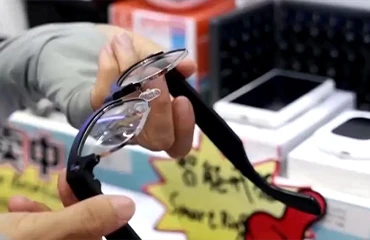
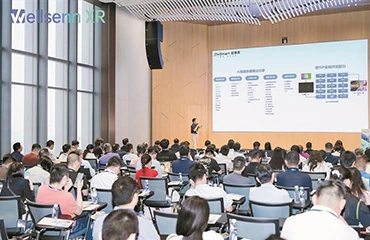
On June 17, the fourth Shenzhen International Eyewear Expo and the inaugural 2026 AI Eyewear Expo entered their second day. This marked the first time AI eyewear was featured in a dedicated exhibition area at a top-tier domestic industry platform. A reporter from 《China Times》 observed on-site that the crowds in Halls 8 and 9 of the Shenzhen Convention and Exhibition Center remained steady, with long lines forming at the entry points for accredited visitors; many industry professionals had arrived early to wait.
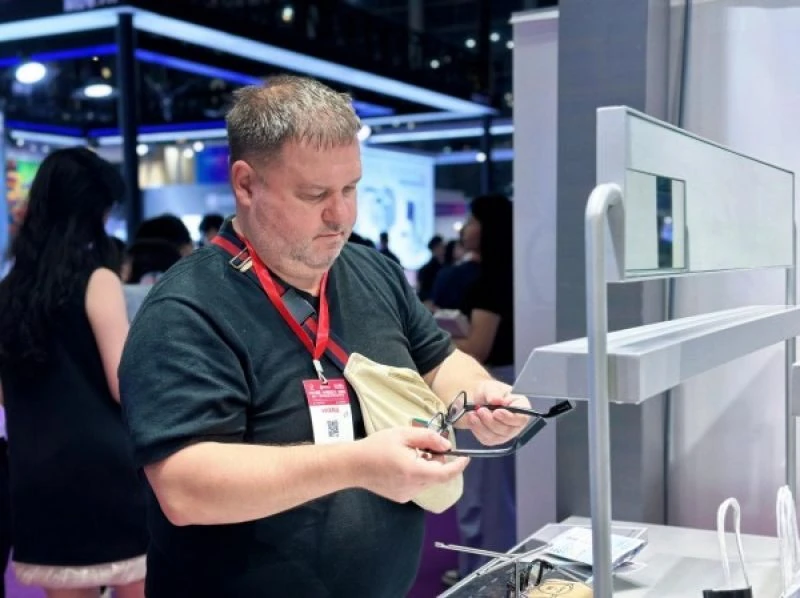
Organizers told this reporter that this year’s expo attracted over 300 exhibiting companies, with more than 20 brands and dozens of new AI eyewear products making their debut. At the event, the industry standard “General Technical Requirements for AI Eyewear,” led by the China Academy of Information and Communications Technology (CAICT), was officially released, filling a gap in unified technical specifications for the field. Meanwhile, an AI terminal industry fund (AI eyewear special fund) worth 2 billion yuan was signed and established. Three hundred procurement delegations from home and abroad attended the event with specific purchase orders, resulting in a major on-site direct purchase order worth 2 million yuan on the very first day of the exhibition.
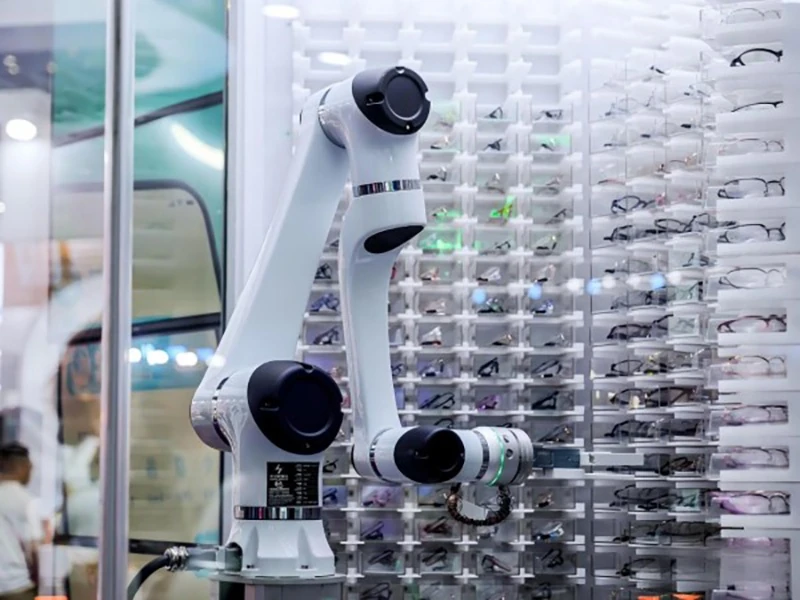
Upon visiting multiple booths, this reporter found that numerous company executives—from chip suppliers to device manufacturers—unanimously stated that the AI glasses industry is transitioning from a stage of exploring individual products to a development cycle that places greater emphasis on ecosystem synergy.
How Will the Industry Chain Coordinate as Standards Take Effect?
As the standards take effect, a 2 billion yuan AI terminal industry fund (dedicated to AI glasses) was officially launched, with a focus on key sectors such as chips, optical components, and device manufacturing. Ten leading companies, including LeEco, Huawei, and ZTE, signed the “Self-Regulatory Pact for Trustworthy AI Glasses.” The dual support of the fund and the pact provides a two-pronged drive—capital and regulations—to propel the industry from “breakthroughs in individual products” toward “ecosystem building.”
On June 17, the latest data from IDC showed that global smart glasses shipments reached 3.566 million units in the first quarter of 2026, a year-over-year increase of 130.1%. Among these, audio and camera-equipped glasses accounted for 2.248 million units, up 167.4% year-over-year; AR/VR shipments reached 1.318 million units, up 85.9% year-over-year. According to forecasts, global consumer-grade smart glasses shipments are expected to exceed 23.687 million units in 2026, with the Chinese market reaching 4.915 million units—accounting for more than 20% of the global total. With the integration of large AI models and the maturation of lightweight hardware, the industry has officially entered a new phase of scaled growth.
As the market transitions from the millions to the tens of millions, the cost of lacking standards will be amplified exponentially. Xiao Duyu, a Second-Level Inspector at the Ministry of Industry and Information Technology, stated at the event that China possesses the world’s most comprehensive eyewear manufacturing supply chain and the most dynamic AI application ecosystem. Promoting the cross-industry integration of these two sectors is not only a concrete implementation of the national “AI+” initiative but also an inevitable choice for industrial transformation and upgrading. He also emphasized that the industry is currently at a critical juncture, transitioning from “breakthroughs in individual products” to “ecosystem building.”
This assessment was corroborated at the exhibition. In terms of the types of participating companies, players in the AI glasses sector currently fall into two main camps: traditional eyewear manufacturers expanding into electronics, and consumer electronics companies integrating manufacturing resources. The efficiency of collaboration between these two camps directly determines the maturity of the industry ecosystem.

Overseas Expansion and Value Chain Upgrading for AI Glasses
According to the latest data from Wind, there are currently more than 190 stocks in the smart glasses industry chain, of which 49 are covered by five or more institutional analysts. Institutions predict that 19 of these stocks will see net profit growth exceeding 30% annually from 2026 to 2028, reflecting the capital market’s clear expectations for high growth in this sector.
As technology gradually matures and standards become more unified, competition will no longer revolve solely around the accumulation of hardware specifications, but rather on deep insights into user needs and the systematic building of brand value. Feedback from buyers offers a glimpse into these market shifts.
At the exhibition, a reporter met Mr. Zhou, a buyer from Shenzhen who works in the traditional eyewear export business. After trying out several smart glasses, he took a liking to a stylishly designed model. “Traditional eyeglass frames are more popular with the general public.” When asked about price acceptance, he gave a pragmatic answer: “We can set higher prices for the U.S. market; but for traditional lower-tier markets like Mexico and Brazil, prices need to be lower.”
This buyer’s choice reflects that AI glasses brands must adopt a differentiated market strategy. Price sensitivity varies significantly across different markets and demographics.
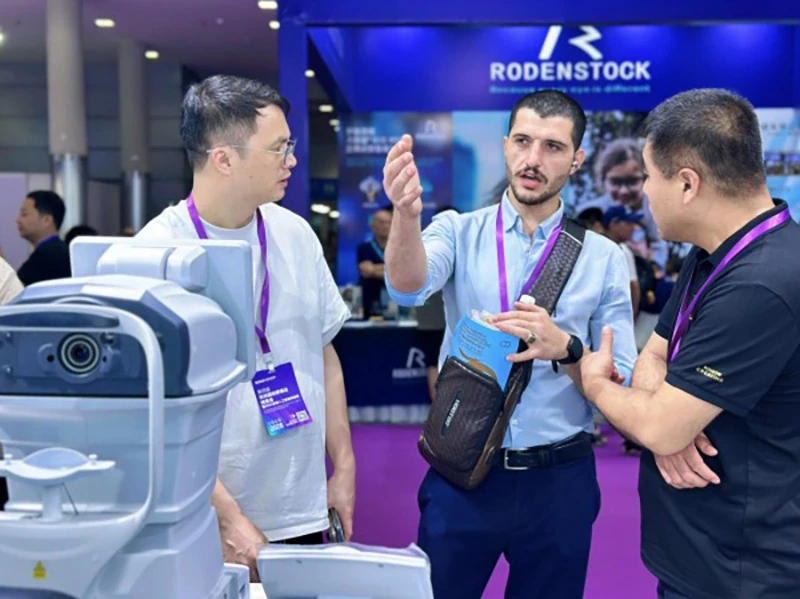
Bai Meiyu shared her practical experience with reporters: “Our products sell well in Taiwan, China, as well as in developed countries in Europe and the U.S., because they’re at the forefront of this trend.” Her sports-style AI smart glasses have been praised in Europe for delivering “sound quality comparable to that of a luxury car worth a million,” making them highly sought after. “People in Europe and the U.S. love sports; they need to wear headphones while also protecting their eyes from the sun, and this product frees up their hands.” She understands that brand-building is a long-term process: “ I hope that in three to five years, Qianhai will naturally become a globally renowned brand.”
Bai Meiyu’s experience is not an isolated case. The president of the French National Federation of Optometrists and the director of the SILMO Paris exhibition also expressed their expectations for Sino-French industrial cooperation at the event.
Li Jin of Huiming Group revealed another dimension of the company’s global strategy. In addition to its global contract manufacturing business, the company’s own children’s smart eyewear brand, “Li Bai,” has established distribution channels in dozens of countries overseas. The AI Eyewear Pod project will also go global through cross-border e-commerce.
Grace Elegant Eyewear, however, has chosen a path that stays closer to the “essence of eyewear.” Huang Keping told reporters that the company’s R&D focuses on solving practical problems and has expanded into the field of assistive technology—collaborating with teams to develop guide glasses for the blind to address navigation and information access issues; simultaneously, they are developing hearing-assist glasses to serve the elderly and people with hearing impairments.
Whether it’s expanding into overseas markets or deepening focus on vertical needs, these efforts point in the same direction: making smart glasses a truly user-centric, everyday wearable device. From the release of the first industry standard to the establishment of a 2 billion special fund, China’s AI glasses industry is at a critical juncture.
Xiao Duyi, a Second-Level Inspector at the Ministry of Industry and Information Technology (MIIT), emphasized “adhering to innovation-driven development” and “deepening application scenarios” at the event, charting the course forward. However, the practical challenges are equally clear: optical technology still needs time to mature; collaboration costs along the industrial chain must be reduced; consumer penetration is far from widespread adoption; and overseas privacy regulatory barriers are rising.
Several executives from exhibiting companies noted that the introduction of standards is only the first step. “We are a grassroots company rooted in the electroacoustics field. Through gradual technological upgrades, we have developed today’s AI smart glasses. Qianhai’s focus is on refining our products to perfection—making them affordable, comfortable, and stylish for the general public,” said Bai Meiyu.
Transitioning from the “world’s factory” to a “global brand,” and shifting from scale expansion to value enhancement, China’s AI glasses industry is currently midway through a long-term transformation. While many uncertainties lie ahead, the direction is already clear.
Source: China Times Author: Huang Haiting
Please log in to your member account first. *



0 Comments