
By: Xihe-
On: 23 Mar 2026




| Sub-Total : | $23.30 |
| Eco Tax (-2.00) : | $4.52 |
| VAT (20%) : | $5.66 |
| Total : | $33.48 |
By: Xihe-
On: 23 Mar 2026
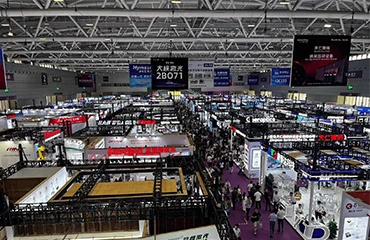
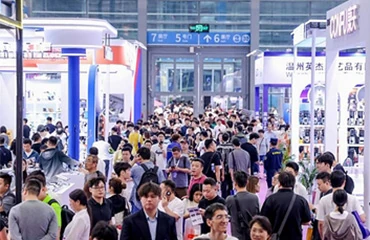
As foreign buyers with their suitcases in tow line up outside the smart glasses stalls in Huaqiangbei, and as shop owners, armed with AI translators, are too busy to even take a break for a meal, a key question arises: Where exactly do these best-selling smart glasses come from?
The answer lies in Bao’an, 30 kilometers away—home to a “5-kilometer industrial cluster.” Chips, PCBs, batteries, structural components… every single part needed for a pair of AI glasses can be sourced within a 5-kilometer radius. This industrial chain advantage, which effectively “compresses time and space,” is drastically shortening the time it takes to bring creative ideas to market.
By early 2026, AI glasses had unsurprisingly become the latest consumer trend. The national government even included them in its trade-in subsidy program, offering a 15% subsidy based on the sales price, as the industry accelerates its transition from a “novelty item” to a “mass-market consumer product.”
Amid this surge, Shenzhen’s Bao’an District has demonstrated a unique sense of composure. Rather than merely chasing the hype of the trend, it has taken a measured approach, releasing the city’s first “Bao’an District Action Plan for Promoting High-Quality Development of the Smart Glasses Industry (2025–2027)” (hereinafter referred to as the “Action Plan”) early this year. The plan sets a clear target of having over 100 enterprises in the industry chain by 2027 and cultivating 2–3 well-known industry leaders. Behind this level-headed approach lies Bao’an’s deep understanding of its own manufacturing strengths and a clear-eyed assessment of the “bucket effect” within the industrial chain.
Taking the “Barrel” Apart
Hardware Foundation and Core Weaknesses
The maturity of smart gla
However, a robust hardware foundation does not necessarily equate to a mature consumer electronics industry. Bao’an’s strategic thinking is precisely reflected in its willingness to confront its weaknesses head-on. The “bucket effect” of smart glasses is equally evident in Bao’an: both Bao’an and Shenzhen as a whole have significant shortcomings in upstream core components—such as chips, light waveguides, and MicroLED displays—as well as in the midstream software ecosystem, including operating systems and cloud-device collaboration. This is precisely where Bao’an’s action plan focuses its efforts—not only to consolidate its “strengths,” but also to address its “weaknesses” through targeted investment promotion and breakthroughs in core technologies, thereby transitioning from a “hardware hub” to an “industrial high ground.”
sses depends on a “barrel” composed of multiple “planks”—including near-eye displays, chips, batteries, interaction systems, and operating systems—and any weak link will hinder overall development. This is precisely where Bao’an begins its assessment of its own industry.
Bao’an’s confidence stems from its impressive “hardware components.” As the second-ranked district among China’s top 100 industrial districts, it is home to nearly 560,000 enterprises, with manufacturing spanning 31 major categories. In the smart glasses sector, Bao’an has strategically gathered 60 companies across the industrial chain: 23 core component manufacturers in the upstream segment, such as Sunwoda’s battery modules and Zhaowei Electromechanical’s micro-drive systems; 10 finished product manufacturers in the midstream, including Luxshare Precision; and 27 terminal brand companies in the downstream. More importantly, a “time-space compressed” industrial ecosystem has taken shape here. As the head of the Shenzhen Augmented Reality Technology Application Association noted: “In Bao’an, a company producing smart glasses prototypes can find all its suppliers—chips, PCBs, batteries, and structural components—within a 5-kilometer radius.” Guan Bin, General Manager of Tianjian Intelligent, corroborated this point, stating that the unique advantage of “securing all industrial chain resources within a 10-kilometer radius” was the key factor in the company’s decision to establish its operations in Bao’an.
From “Supporting Industries” to “End-Users”
A Natural “Industrial Transition”
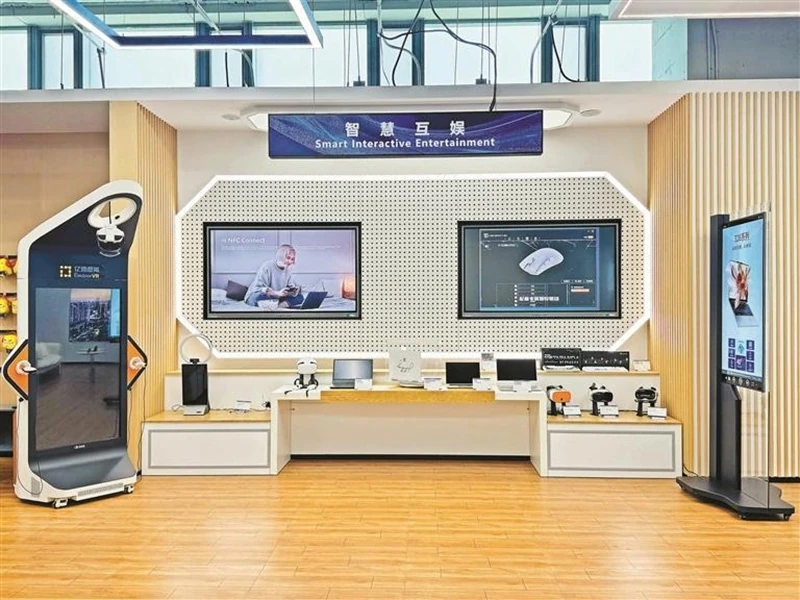
▲Yijing Virtual Showroom.
Bao'an’s focus on smart glasses is not merely a matter of jumping on the bandwagon; rather, it represents a “natural” industrial leap forward built upon a robust manufacturing foundation. For hardware products like smart glasses, mastering core components and precision manufacturing means holding the power to define the value chain.
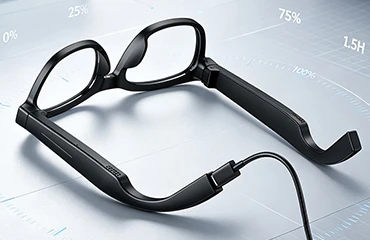
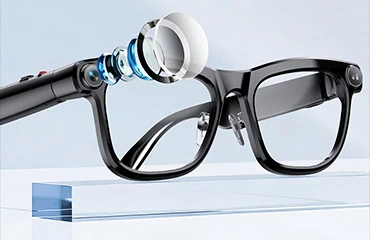
For a long time, the outside world has often mistakenly equated “manufacturing” with “low value-added.” However, in the field of smart glasses, the hardware itself represents the greatest technical hurdle. When a pair of glasses must integrate four major systems—display, communication, sensing, and battery life—into a frame weighing just a few dozen grams, the solid-state batteries that solve “battery anxiety,” the integrated die-casting processes that achieve “lightweight design,” and the micro-actuation systems that ensure “smooth interaction”—these core competencies of Bao’an-based companies are precisely the “technological foundation” of the entire industry.
This is Bao’an’s philosophy: not to be a follower, but a trailblazer.
Globally, there are very few places capable of simultaneously addressing “the chips in the temples, the hinges on the frames, the batteries at the tips of the temples, and the integrated manufacturing of the entire device” all within a single region. Bao’an possesses precisely this confidence. With 60 companies in the smart glasses industry chain within the district—ranging from Sunwoda’s battery modules to Zhaowei Electromechanical’s micro-drive systems, from Luxshare Precision’s precision manufacturing to Yijing Virtual’s solutions—this “certainty of a fully integrated supply chain” represents the highest industrial value in an era of global supply chain volatility. Here, the cost of trial and error in innovation is minimized, while the speed of product iteration is maximized.
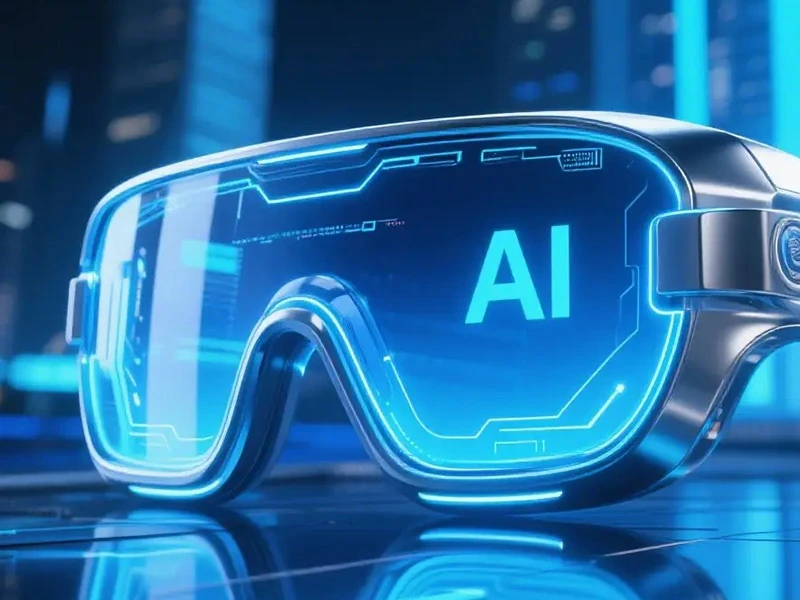
Therefore, Bao’an’s ambition is not merely a simple shift from “manufacturing” to “branding,” but rather to leverage the advantages of its “hardware foundation” to the fullest and use this as a springboard for upward expansion.
The roadmap for the action plan is very clear: on the one hand, by establishing special funds and opening up application scenarios, it supports local enterprises in transitioning from “supplying components for end devices” to “developing their own end devices.” Leading companies such as Yingshi Innovation and Shaoyin Technology have entered the market by leveraging their strengths in hardware R&D, which is a perfect example of this “gradual accumulation leading to a breakthrough.” On the other hand, by developing the Jian Gangshan Industrial Cluster, the “incubator–accelerator–industrial park” ecosystem is integrated, enabling startup teams with core technologies to turn their ideas into products in the shortest possible time.
This represents a classic form of “mutual empowerment”: a robust hardware foundation provides the most fertile ground for terminal innovation, while the rise of terminal brands opens up broader market opportunities for upstream component suppliers. For example, Xianshun Technology’s world’s smallest near-eye display system was able to quickly find suitable battery and structural component suppliers in Bao’an. This efficiency advantage derived from “industrial synergy” constitutes a core competitive edge that other regions struggle to replicate.
Mutual Empowerment
A New Paradigm for the Integration of Manufacturing and Services
Through the smart glasses industry chain, we can gain deeper insight into the underlying logic of Bao’an’s transformation: promoting the “integration and mutual empowerment” of manufacturing and modern services.
At its core, the smart glasses industry represents a highly integrated fusion of “hard manufacturing” and “soft services.” It requires not only precision manufacturing capabilities for optical and electronic components but also the support of modern service sectors such as AI algorithms, content ecosystems, and brand marketing. Bao’an has keenly recognized this, implementing a comprehensive strategy that combines “space, policy, funding, talent, and platforms.” The underlying objective is to build an industrial ecosystem where manufacturing and services develop in synergy.
This synergy is already taking shape. On the one hand, Bao’an’s robust manufacturing sector has generated massive demand for production-oriented services such as R&D and design, supply chain finance, and data services. On the other hand, service capabilities—led by artificial intelligence—are feeding back into the manufacturing process, enhancing product value. In Bao’an, examples such as Valeo’s “lights-out factory” and Sunwoda’s smart production lines exemplify the concept of “services enhancing manufacturing.” Smart glasses, meanwhile, have become the ultimate testing ground for gauging the quality of this “integration of the two sectors.”
Looking back from the spring of 2026, Bao’an’s journey in the smart glasses industry has not been a straight-line sprint, but rather a “systematic campaign” built upon deep manufacturing roots. It has avoided falling into “trend-chasing anxiety,” instead calmly dissecting the “weakest links” in the industrial chain to address shortcomings and strengthen its strengths. At this critical juncture of transitioning from a “major manufacturing district” to a powerhouse of “manufacturing plus services,” Bao’an is using smart glasses as a fulcrum to leverage a more resilient and competitive future. Whether this collision between the “five-kilometer industrial circle” and “next-generation devices” will ultimately give birth to world-class brands—the answer may lie in every solid step taken to strengthen and complete the industrial chain.
Source: Bao'an Daily By He Zulan, All-Media Reporter

Please log in to your member account first. *
0 Comments