
By: AmyLite-
On: 02 May 2026




| Sub-Total : | $23.30 |
| Eco Tax (-2.00) : | $4.52 |
| VAT (20%) : | $5.66 |
| Total : | $33.48 |
By: AmyLite-
On: 02 May 2026
I Thought Bone Conduction Meant “Total Privacy”—But I Was Wrong
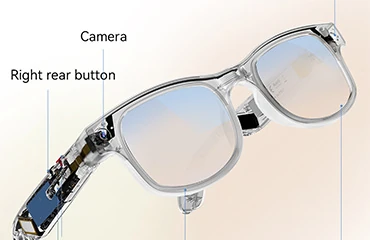
When I first got my hands on these AI smart glasses, what I was most excited about was the bone conduction headphone feature. The ads claimed, “Sound is transmitted through skull vibrations, bypassing the eardrum and preventing sound leakage.” I naively assumed this meant I could listen to podcasts and make phone calls without a care in the world in quiet places like libraries and offices.
That is, until one day I was wearing the glasses in the library, listening to a business interview show with the volume set to 60%. Twenty minutes later, a girl sitting next to me gently tapped my shoulder and handed me a note that read: “Hi, I can hear the sound coming from your glasses, and it’s very clear.”
My face flushed instantly. Afterward, I looked into it and discovered that bone conduction isn’t completely soundproof—it’s just slightly better than traditional open-ear headphones. But in quiet environments, when the volume exceeds 50%, people within a meter can still hear a “buzzing” vibration. According to test data from the SoundGuys lab, mainstream bone conduction glasses have a sound leakage level of approximately 45–50 dB at 60% volume—equivalent to the hum of a refrigerator—which is easily detectable in a quiet library.
Bone conduction isn’t completely soundproof, so choosing the right product is key to avoiding awkward situations.


Please log in to your member account first. *




0 Comments